Reviewed guide – Updated September 15, 2026
Vietnam Travel Cost
Vietnam travel cost for international visitors is best planned as a land-only budget, excluding international flights. As of July 14, 2026, use USD 30-45/day for a basic backpacker trip, USD 70-120/day for comfortable mid-range travel, and USD 180-350+/day for premium or private arrangements. Route, comfort, and season decide the final budget.
Ranges assume one person, shared rooms where relevant, and exchange-rate math rounded around VND 26,000 for planning.
Concierge verdict
Most first-time visitors should budget the route before the daily number. A classic 10-day land-only trip can be planned around USD 550-850 basic, USD 1,100-1,900 comfortable, or USD 2,600-5,500+ premium/private, excluding international flights.
- Best value: fewer bases, trains or sensible domestic flights, simple food, and hotels booked early.
- Biggest movers: solo rooms, domestic flights, cruises, private guides, beach resorts, and holiday peaks.
- Verify before booking: hotels, tours, rail seats, airport transfers, and exchange rates for your exact dates.

Cost planning lens
Price the trip as a sequence of decisions.
The cleanest Vietnam budget is built from named choices: where you sleep, how often you move, which transfers protect energy, and which one or two experiences deserve a higher spend. A daily average is useful only after those choices are visible.
Vietnam Daily Travel Budget Ranges by Travel Style
A realistic daily travel budget in Vietnam is 30 to 45 USD (750,000 to 1,125,000 VND) for budget backpackers, 70 to 120 USD (1,750,000 to 3,000,000 VND) for mid-range boutique travelers, and 200 USD or more for luxury resort travel. Daily costs cover accommodation, dining, and local transit, excluding long-haul international flights.
💰 2026 Ground Truth Daily Price Realities Factsheet:
- Daily Dining Price Benchmarks (2026): Street food Pho Bo: 40,000–60,000 VND; Banh Mi pate: 25,000–40,000 VND; Egg Coffee (Ca Phe Trung): 35,000–50,000 VND; Draft beer (Bia Hoi): 11,000–15,000 VND per glass. Mid-range sit-down restaurant meal: 180,000–320,000 VND per person.
- Taxi & Rideshare Tariffs: GrabCar base flag fall: 22,000–25,000 VND (first 2 km), subsequent rate: 14,500–16,500 VND / km. Mai Linh Taxi hotline (024.38.38.38.38 / 028.38.38.38.38) metered tariff: 15,000–16,000 VND / km. Vinasun (028.38.27.27.27): 16,000 VND / km. Official airport gate exit toll: 10,000–15,000 VND.
- Domestic Aviation Baggage Surcharges: Vietjet Air / Vietnam Airlines 15kg checked baggage costs 190,000–270,000 VND when added during online booking, but spikes to 450,000–600,000 VND if purchased at airport check-in counters.
- Connectivity & Data: 30-day tourist eSIM (Viettel or Vinaphone) with 4GB–5GB daily high-speed data: 280,000–350,000 VND ($11–$14 USD). Purchase at official airport booths or online before boarding.
- ATM Surcharges & Conversion Traps: Local ATM fee is typically 50,000 VND (~$2 USD). Choose “Without Conversion” on ATM screens to let your home bank convert at the genuine Visa/Mastercard mid-market rate rather than the local ATM’s inflated 4%–6% spread.
| Travel style | Daily land-only budget | 10-day land-only budget | What it usually means | What can push it higher |
|---|---|---|---|---|
| Basic/backpacker | USD 30-45/day | USD 550-850 | Hostels or simple shared rooms, local meals, buses or trains, selective paid sights. | Solo rooms, last-minute transport, paid tours, beach stays, holiday demand. |
| Comfortable/mid-range | USD 70-120/day | USD 1,100-1,900 | Private room in practical hotels, better transfers, some tours, more relaxed city choices. | Domestic flights, better hotel locations, cruises, food tours, peak-season rooms. |
| Premium/private | USD 180-350+/day | USD 2,600-5,500+ | Boutique or luxury hotels, private transfers, private guides, curated cruises, slower pace. | Beach resorts, holiday peaks, suites, premium cruises, private regional touring. |
Sample budgets by trip length
Use these as planning scenarios, not fixed quotes. Shorter trips often cost more per day because airport transfers, domestic flights, and one-time tours are spread across fewer nights. Longer trips can lower the daily average only when the route slows down.
| Travel style | 7-day land-only planning range | 10-day land-only planning range | 14-day land-only planning range | Editorial note |
|---|---|---|---|---|
| Basic/backpacker | USD 420-700 | USD 550-850 | USD 800-1,350 | Works best with fewer bases, simple rooms, buses or trains, and only one higher-cost highlight. |
| Comfortable/mid-range | USD 800-1,400 | USD 1,100-1,900 | USD 1,600-2,900 | This is the sweet spot for most first-time visitors who want private rooms, better routing, and some guided days. |
| Premium/private | USD 1,900-4,000+ | USD 2,600-5,500+ | USD 3,700-8,000+ | Private support, premium cruises, and resort nights should be priced as named line items, not blended into a daily average. |
Why the math is not just daily rate times nights: arrival/departure transfers, visa, intercity moves, cruises, and one-off tours can make a short trip look expensive and a slower trip look better value.
Line items to check before booking
| Cost line | Planning note checked July 14, 2026 | VietnamGuide guidance |
|---|---|---|
| E-visa | Official fee is USD 25 single-entry or USD 50 multiple-entry. | Use the official portal, then confirm eligibility, passport details, and processing time before booking tight arrivals. |
| Exchange rate | Vietcombank XML data returned DateTime 7/14/2026 6:07:17 PM with USD buy VND 26,040.00, transfer VND 26,070.00, and sell VND 26,450.00. | For this guide, think roughly USD 1 = VND 26,000-26,500, rounded around VND 26,000 for planning. Use live rates when paying hotels, withdrawals, or large cash expenses. |
| Rail fares | Official rail fare lookup was checked via dsvn.vn. | Train cost depends on route, seat or berth, train number, and availability. Re-check before choosing rail over a flight. |
| Hanoi Noi Bai arrival | Airport public transport examples include buses and airport services into Hanoi. | Use public transport for low-budget daylight arrivals; choose taxi or ride-hail for late landings, luggage, or families. |
| Ho Chi Minh City airport arrival | Tan Son Nhat examples include airport bus, taxi, and ride-hail options into the city. | Check pickup rules and current fares on arrival, especially when landing at busy hours. |
| Hotels and tours | Hotel and tour prices are volatile and require live checks by date. | Compare refundable rates, cancellation terms, holiday peaks, and whether a tour replaces a transfer cost. |
Practical cost visuals to price before arrival
These images are practical prompts, not decoration. Use them to decide which transport and cash lines need live checks before you pay for rooms, trains, flights, tours, or arrival transfers.


Choose your budget by route, not just by day
A Vietnam budget becomes clearer when the route is named. The same daily comfort level can behave very differently on a compact northern loop, a north-to-south route, or a beach extension with resort nights.
| Route archetype | Main cost driver | When it saves money | When it gets expensive | VietnamGuide verdict |
|---|---|---|---|---|
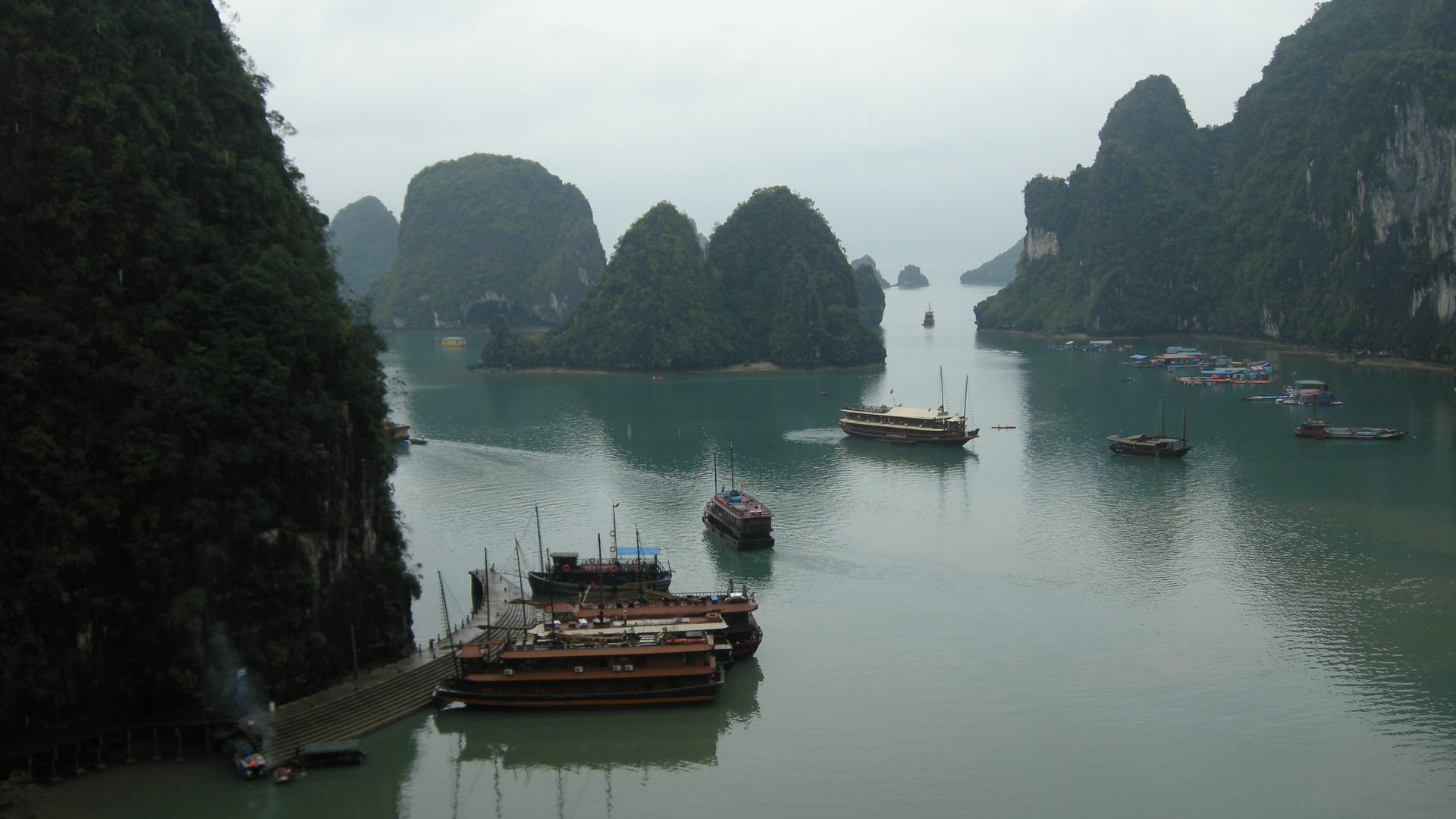
| Hanoi, Ninh Binh, Ha Long or Lan Ha | Bay cruise quality, transfer style, and whether you add a private car. | You keep one Hanoi base and avoid extra domestic flights. | Premium cruises, private transfers, and single cabins lift the total quickly. | Strong value for first-timers if the cruise is treated as a separate line item. |
| Classic north-to-south | Domestic flights, airport transfers, and too many one-night stops. | You choose three or four bases and avoid backtracking. | You add Sapa, Ha Long, Hoi An, Mekong, and beach nights into one short trip. | Worth paying for smarter routing before paying for nicer rooms. |
| Central Vietnam slow trip | Hotel location, food experiences, day trips, and weather flexibility. | Da Nang, Hoi An, and Hue are linked in a compact route with fewer flights. | You use private cars every day or stay in high-demand heritage/beach locations. | Often the cleanest mid-range value if the season fits. |
| Beach or island add-on | Resort nights, flight timing, airport transfers, and weather risk. | You add enough nights to justify the transfer and choose refundable rooms. | You fly in for one or two resort nights during a peak window. | Budget it as a premium module, not a normal city day. |
| Private family route | Room configuration, private vehicles, guide days, and child pacing. | Transfers and guides are shared across the group. | You need connecting rooms, flexible cancellations, and last-minute vehicle changes. | Private support can be better value for families than forcing a low daily budget. |
Visual route-cost cues
These are not pretty extras. They show where the budget usually bends: arrival city pressure, countryside add-ons, cruise and transfer intensity, central Vietnam pacing, southern city balance, and river or island add-ons that deserve their own line item.


The decisions that change the estimate
| Decision | Lower-cost version | Higher-cost version | Verdict |
|---|---|---|---|
| Route shape | Fewer bases, overnight rail where sensible, limited one-way hops. | Many bases, extra domestic flights, private cars, tight cruise connections. | Simpler routes usually cost less and feel calmer. |
| Comfort level | Simple rooms and local meals with a few paid highlights. | Central boutique hotels, private guides, upgraded transfers, premium dining. | Hotels and private support move the total more than everyday meals. |
| Season | Shoulder dates, flexible cancellations, fewer holiday nights. | Tet, public holidays, beach peaks, school-holiday resort demand. | Season can change both room rates and the cost of fixing bad routing. |
| Cruises and beaches | Day trips or simple overnight cruises, modest beach hotels. | Premium bay cruises, island resorts, private transfers. | Treat these as separate line items, not normal daily spend. |
Solo, couple, and family budgets behave differently
Per-person budget advice can mislead solo travelers and families. Some costs are individual, while others become cheaper per person when shared.
| Cost behavior | Solo traveler | Couple or two friends | Family or small group | Planning implication |
|---|---|---|---|---|
| Hotel rooms | Private rooms raise the daily average; dorms or simple guesthouses control it. | Room cost is shared, so mid-range comfort can become better value. | Connecting rooms, family rooms, or apartments need earlier booking. | Do not compare solo and couple budgets without adjusting the room line. |
| Transfers and private cars | Often expensive unless replacing a difficult public transfer. | Can be sensible for late arrivals or luggage-heavy moves. | Often worth pricing because the cost is shared and logistics are calmer. | Private transport is a comfort decision, not always a luxury mistake. |
| Visa, tickets, meals, and flights | Mostly individual costs. | Mostly individual costs, except shared taxis and rooms. | Multiply carefully and check age rules for attractions and hotels. | Shared rooms cannot offset every per-person cost. |
| Guides and private experiences | Best saved for one or two moments where context matters. | Can improve food, history, craft, or countryside days without dominating the trip. | Can prevent wasted time and keep pacing realistic. | Spend where the guide changes the outcome, not where the route is self-explanatory. |
Costs that do not fit a daily budget
The easiest way to under-budget Vietnam is to hide one-off costs inside a daily number. Pull these out before you decide whether your trip is basic, comfortable, or premium.
| Hidden cost or trap | Why it happens | How to budget it |
|---|---|---|
| Domestic-flight baggage | The cheapest fare may not match your luggage, route, or timing. | Check baggage rules before comparing a flight with a train or private transfer. |
| Late arrival or early departure | Public transport may be less practical with luggage, children, or fatigue. | Price a safer airport transfer before deciding the arrival city is cheap. |
| Holiday and Tet demand | Rooms, transport, and driver availability can tighten during public-holiday windows. | Book refundable rooms early and hold more buffer for route changes. |
| Cruise and tour inclusions | Some prices include transfers, meals, entrance fees, or guide time; others do not. | Compare the full inclusion list, not just the headline price. |
| Weather rerouting | Bad weather can make beach time, mountain roads, or bay trips less efficient. | Keep one flexible night or a cash buffer rather than locking every transfer tightly. |
| Cash, card, and ATM friction | Small vendors may prefer cash, while hotels and higher-value bookings may use card or transfer rules. | Separate daily cash from larger hotel, transport, and tour payments, then check live exchange rates before withdrawals. |
| Poor hotel location | A cheaper room can create extra taxi time, missed meals, and less rest. | Pay more for location on short city stays; save on room style when you have more time. |
Where to spend more, and where to save
The premium choice is not always the expensive one. Spend where the money removes friction, protects time, or improves context; save where the cheaper version gives almost the same travel outcome.
- Spend more: late-arrival airport transfers, better hotel location on short stays, a reputable bay cruise, a guide for history/food/craft context, and refundable hotels during weather-sensitive periods.
- Save: overbuilt city tours, one-night resort upgrades, unnecessary domestic hops, daily Western meals, and private cars where trains or direct flights solve the route cleanly.
- Pause before upgrading: if the upgrade does not protect time, sleep, safety, context, or cancellation flexibility, it may just make the itinerary heavier.
Example budget builds by trip style
Use these as route sketches, not promises. The right answer depends on your exact dates, room category, transfer style, and how many premium decisions are hiding inside the route.
| Trip style | Budget shape | What is included | What you should watch |
|---|---|---|---|
| 10-day north + central value route | Usually lands near the middle of the comfortable band when hotels are practical and transfers are simple. | Hanoi, Ninh Binh, one bay or Lan Ha cruise, Hue or Hoi An, and a smart airport plan. | A domestic flight or premium cruise can add more than a hotel upgrade. |
| 14-day north-to-south route | Comfortable to premium depending on how many cities, flights, and private days you add. | Three or four bases, at least one slower heritage or countryside stop, and one sensible buffer night. | Too many one-night stops make the route expensive without improving the trip. |
| Premium couple or family route | Usually rises faster in rooms, transfers, and guide support than in food. | Better hotel locations, private cars when they protect energy, one or two curated experiences, and cancellation flexibility. | Suite pricing, holiday peaks, and beach or island modules can inflate the route quickly. |
| Backpacker with one highlight spend | Can stay inside the basic band if the highlight is treated as a named splurge. | Simple rooms, local food, public transport where sensible, and one paid cruise, tour, or transfer upgrade. | The highlight should replace a weaker day, not stack on top of an already expensive route. |
Concrete line-item budget builds
To calculate your own number, add the row instead of copying the headline range. The examples below are land-only and exclude international flights; rooms assume typical sharing for the style, so solo private-room travelers should raise the room line first.
| Example trip | Rooms | Intercity transport | Cruise/tours | Food/local transport | Visa/admin | Buffer | Example total |
|---|---|---|---|---|---|---|---|
| 10-day basic with one highlight | USD 120-180 | USD 90-140 | USD 100-170 | USD 160-230 | USD 25-50 | USD 55-80 | USD 550-850 |
| 10-day comfortable north + central | USD 400-650 | USD 160-280 | USD 220-360 | USD 200-320 | USD 25-60 | USD 95-230 | USD 1,100-1,900 |
| 14-day comfortable north-to-south | USD 650-1,100 | USD 280-520 | USD 260-520 | USD 300-520 | USD 25-60 | USD 85-180 | USD 1,600-2,900 |
| 10-day premium/private | USD 1,100-2,300 | USD 350-750 | USD 550-1,250 | USD 350-700 | USD 50-120 | USD 200-380 | USD 2,600-5,500 |
How to build your own Vietnam budget
Use this worksheet before booking anything non-refundable: rooms + intercity transport + tours/cruise + food/day + local transport + visa + buffer. The buffer is not a luxury line; it protects the trip when a transfer, room, weather decision, or exchange rate moves.
| Worksheet line | How to estimate | What to live-check |
|---|---|---|
| Rooms | Price each city by exact date, room count, cancellation rule, and location. | Refundable vs non-refundable rate, taxes/fees, breakfast, and distance from the area you will actually use. |
| Intercity transport | Separate flights, trains, private cars, ferries, cruises, and airport transfers. | Baggage, seat or berth type, pickup rule, travel time, and whether the transfer replaces a hotel night. |
| Tours and cruise | List the few experiences that change the trip outcome. | Meal inclusions, entrance fees, group size, guide language, transfer inclusion, and cancellation policy. |
| Food and daily local transport | Use your travel style as a range, then adjust for dining habits and city pace. | Whether hotel location lets you walk, and whether your planned meals are local, mixed, or premium. |
| Visa and admin | Add official e-visa fee where applicable and any document/admin costs from your own country. | Eligibility, entry type, passport details, processing time, and the official portal before payment. |
| Buffer | Hold extra room for weather changes, late arrivals, better rooms, health needs, or a simpler transfer. | Forecast-sensitive route points, holiday dates, and any non-refundable bookings. |
- Choose your route and number of bases before picking a daily target.
- Price hotels by city, room type, and exact date.
- Add intercity transport separately: domestic flights, trains, cars, airport transfers, and cruises.
- Choose where private guides or tours genuinely improve the trip.
- Hold a buffer for weather changes, better rooms, luggage, late arrivals, and rest days.
Prebook, live-check, or stay flexible?
Vietnam is not a trip where every cost should be locked early. Prebook the expensive or fragile pieces, live-check moving prices, and leave ordinary local decisions flexible enough to protect the route.
| Cost decision | Prebook when… | Live-check close to travel when… | Stay flexible when… |
|---|---|---|---|
| Hotels | Dates hit holidays, beach peaks, family room needs, or premium locations. | You are comparing refundable rates, taxes, breakfast, and location value. | You have a longer route with extra nights and no special room requirement. |
| Domestic flights | The route depends on a specific open-jaw or tight connection. | Baggage, schedule changes, and airport transfer time could erase the cheap fare. | A train, private car, or slower route can solve the same movement. |
| Cruises and guided days | Operator quality, cabin type, group size, or language matters. | Weather, transfer inclusions, cancellation terms, and entrance fees are unclear. | A simple day trip gives almost the same outcome as an expensive overnight. |
| Local meals and city transport | A food tour or airport pickup protects a short stay. | Ride-hail availability, cash needs, or late-night arrival rules affect comfort. | The hotel location gives you easy walking choices and no hard schedule. |
| Weather-sensitive add-ons | Limited permits, scarce rooms, or a premium operator is the whole reason for the stop. | Mountain roads, caves, cruises, beaches, or islands could be weakened by weather. | The add-on is optional and a better city or countryside day would be less stressful. |
Live-check checklist before you pay
- Hotel exact dates, room type, location, cancellation terms, taxes, and breakfast.
- Domestic flight fare rules, checked baggage, airport transfer time, and delay tolerance.
- Rail seat or berth type, train number, departure time, and whether the station transfer is practical.
- Cruise inclusions: transfer, meals, entrance fees, cabin type, cancellation, and weather handling.
- Airport arrival plan for Hanoi or Ho Chi Minh City, especially after dark or with luggage.
- Official e-visa fee, entry type, passport data, processing time, and arrival date cushion.
- Live exchange rate before large cash withdrawals, hotel payments, or tour balances.
- One flexible buffer decision: a refundable room, slower transfer, or spare night where the route is most fragile.
Vietnam travel cost FAQ
How much money do I need for 10 days in Vietnam?
For a land-only 10-day trip, plan roughly USD 550-850 basic, USD 1,100-1,900 comfortable, or USD 2,600-5,500+ premium/private before international flights. The real number depends on route shape, hotel style, domestic flights, cruises, and private support.
Is Vietnam cheap for international tourists?
Vietnam can be good value, but it is not automatically cheap if the route is overloaded. Hotels, domestic flights, cruises, private transfers, resort nights, and holiday dates can move the budget faster than everyday meals.
Should I budget in USD or Vietnamese dong?
Use USD for high-level planning if that is your home budgeting language, but expect most local spending to happen in Vietnamese dong. Re-check live exchange rates before large withdrawals, hotel payments, or tour balances.
What is the easiest way to lower my Vietnam trip cost?
Reduce the number of bases before cutting meaningful experiences. Fewer transfers usually lowers cost, protects energy, and makes mid-range hotels or one strong guided day easier to justify.
What should I not hide inside a daily budget?
Do not bury e-visa fees, airport transfers, domestic flights, trains, cruises, private cars, peak-date hotel jumps, and weather buffers inside an average day. List them separately before deciding whether the trip is basic, comfortable, or premium.
Where to go next
Use the Costs hub for the broader planning method, the Itineraries hub to reduce hidden transfer costs, the Best Time guide to avoid seasonal mistakes, the Plan hub for entry and logistics checks, and Compare when a route decision can save both time and money.
For payment logistics, use Money in Vietnam: Cash, Cards and ATMs after you have a budget shape. For connectivity costs and arrival friction, use SIM and eSIM in Vietnam before comparing roaming, local SIMs, and pre-trip eSIMs.