Where to Stay in Dong Van (2026): Hotels & Homestays
Choosing where to stay in Dong Van is one of the most critical overnight planning decisions on the classic northern Ha Giang motorcycle loop. Located high upon the UNESCO Global Geopark karst plateau at an elevation exceeding 1,000 meters, this remote border outpost splits lodging into distinct geographic environments: atmospheric clay-and-stone merchant houses surrounding the historic French-era market, modern concrete multi-story hotels in the flat town basin, and cliffside ethnic homestays perched directly along the rim of the vertiginous Ma Pi Leng Pass.
The Concierge Verdict
For first-time loop riders and cultural travelers, stay in or immediately adjacent to the Dong Van Old Quarter along Pho Co street. You gain effortless evening access to bustling hot-pot eateries, ethnic corn wine taverns, and weekend market gatherings without navigating treacherous unlit mountain gravel in the dark. Authentic Hmong clay homestays cost 280,000 to 480,000 VND ($11.20 – $19.20 USD) per night for a private room with hot water showers. If you crave morning sea-of-clouds vistas and absolute quietude, ride 6 kilometers east toward Pa Vi Hmong Cultural Village below the pass, where communal stone chalets cost 400,000 to 750,000 VND ($16.00 – $30.00 USD).
Neighborhood Comparison: Where to Stay in Dong Van
| Zone / Sector | Vibe & Atmosphere | Nightly Room Range (VND / USD) | Best For | Recommended Properties |
|---|---|---|---|---|
| Old Quarter (Pho Co Dong Van) | Century-old timber architecture & night street food | 250,000 – 550,000 VND ($10.00 – $22.00 USD) | Solo loop riders & heritage seekers | Dong Van Eco Homestay, Ancient Town Homestay |
| Dong Van New Town (Basin Center) | Paved highway hotels with private garage parking | 450,000 – 900,000 VND ($18.00 – $36.00 USD) | Couples, tour vans & elevator preference | Hoa Cuong Hotel, Lam Tung Hotel, Binh Minh |
| Pa Vi Cultural Village (Pass Staging) | Traditional stone walls & valley mist scenery | 350,000 – 800,000 VND ($14.00 – $32.00 USD) | Landscape photographers & quiet retreats | Auberge de Meo Vac, Meo Vac Clay House, Pa Vi Hmong |
| Ma Pi Leng Canyon Rim | Dramatic cliffside drops over Nho Que River | 300,000 – 700,000 VND ($12.00 – $28.00 USD) | Adventure backpackers & sunrise hunters | Ma Pi Leng Homestay, Panorama Eco View, Skywalk Base |
District 1: Dong Van Old Quarter (Pho Co)
The Old Quarter represents the historic soul of the plateau. Centered around stone merchant houses erected in the 1920s by Chinese and Hmong traders, this walking zone features red clay walls, carved timber lintels, and yin-yang roof tiles. During cool autumn evenings, charcoal smoke drifts past steaming cauldrons of au tau porridge and grilled pork skewers.
Rooms here are primarily rustic family-run homestays and heritage guesthouses. Private bedrooms with thick blankets and modern plumbing rent for 300,000 to 500,000 VND ($12.00 – $20.00 USD), while shared dorm bunks for backpackers cost 120,000 to 180,000 VND ($4.80 – $7.20 USD). Insulation is modest, meaning winter temperatures dipping below 5°C (41°F) require thermal sleepwear or electric heating blankets.
District 2: Dong Van Modern Town Basin
Just two blocks behind the historic market, the town expands into wide asphalt avenues lined with 3-star commercial hotels. If you ride with a large organized tour group, travel with children, or demand robust heating, private ensuite bathrooms, and secure lock-up parking for expensive motorbikes, this modern sector delivers superior comfort.
Properties such as Hoa Cuong Hotel feature elevator access, generators that resist plateau power outages, and hot water pressure tanks. Standard double rooms cost 500,000 to 850,000 VND ($20.00 – $34.00 USD) including breakfast noodles. While lacking antique atmosphere, you gain restful sleep away from the morning market loudspeaker broadcasts.
District 3: Pa Vi Village & Ma Pi Leng Cliff Staging
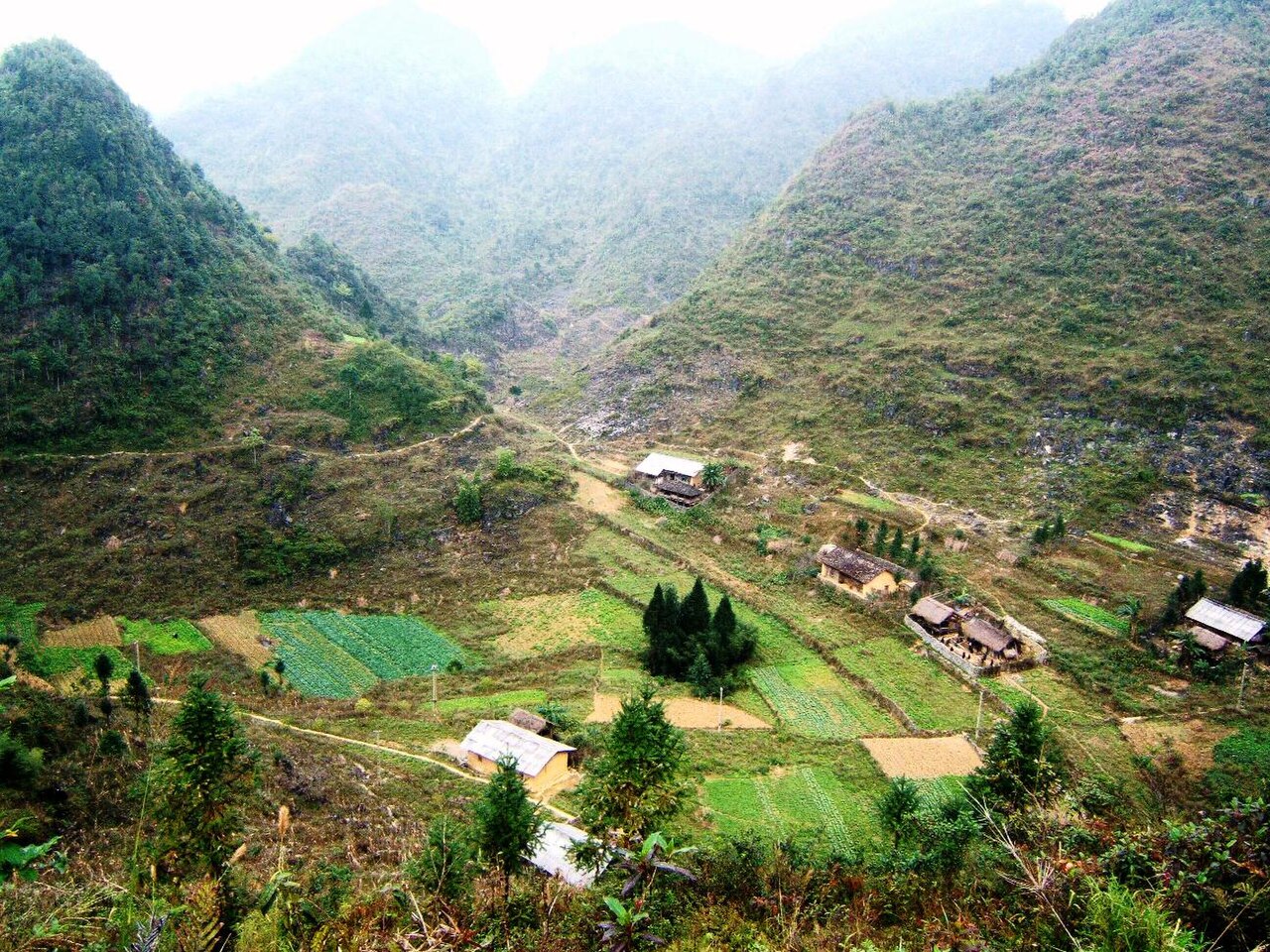
Located on the eastern fringe heading toward Meo Vac, Pa Vi Cultural Village was purposefully designed to preserve authentic Hmong stone fence masonry while offering organized traveler hospitality. Nestled beneath dramatic limestone spires, wide flagstone pathways connect peaceful courtyard lodges.
Rooms range from 380,000 to 750,000 VND ($15.20 – $30.00 USD) for comfortable en-suite private chalets with hand-embroidered hemp textiles. Communal family dinners featuring wild mountain vegetables, crispy spring rolls, and fragrant herbal tea cost roughly 120,000 to 160,000 VND ($4.80 – $6.40 USD) per person, creating unforgettable cross-cultural exchanges.
Essential Dong Van Lodging Logistics
- Heating & Mountain Winter Realities: Between November and February, night temperatures plummet. Confirm that your property provides high-wattage space heaters or electric mattress pads (dem suoi dien) before paying your deposit.
- Weekend Market Surges: Friday and Saturday nights sell out weeks in advance due to the famous Sunday morning ethnic market. Reserve your bed ahead of arrival.
- Motorbike Parking Security: Always verify that your guesthouse offers an indoor ground-floor vestibule or gated courtyard to shelter your rented motorcycle from heavy morning mist and dew.
Frequently Asked Questions
Is it better to stay in Dong Van Old Quarter or Pa Vi village?
Old Quarter is best for evening dining, street food, and weekend market atmosphere on foot. Pa Vi village offers scenic limestone views, peace, and traditional Hmong stone courtyard architecture 6 kilometers away.
Do hotels in Dong Van have room heating during winter?
Modern hotels like Hoa Cuong provide heating air-conditioners. Traditional homestays rely on electric heated blankets and thick quilts, which are essential when temperatures drop below 5°C (41°F).
How much does lodging cost in Dong Van?
Authentic clay homestays cost 250,000 to 500,000 VND ($10.00 – $20.00 USD) for a private double room, while modern 3-star town hotels range from 500,000 to 900,000 VND ($20.00 – $36.00 USD).
Do I need to book accommodation in Dong Van in advance?
Yes, especially for Friday and Saturday nights between September and December when buckwheat flower festivals and the Sunday ethnic market attract peak domestic and international loop riders.
Where to Go Next
Dong Van serves as the dramatic centerpiece of northern mountain touring. Map the full loop route in our Ha Giang travel guide, explore southern highland staging with our Sapa to Ha Giang transport breakdown, check eastern non-tourist connections using our Ha Giang to Cao Bang transport guide, review Night 1 bases in our where to stay in Yen Minh guide, master the mountain ascent via our Ha Giang to Dong Van transport guide, explore quiet valley lodgings in our where to stay in Du Gia guide, and compare provincial lodging in our where to stay in Cao Bang review.
Connected Destinations along the Northern Highlands Frontier
Continue your Vietnam route seamlessly with verified transit times and natural regional connections.
Ha Giang Extreme Loop
Ride through Ma Pi Leng pass, Dong Van Karst Plateau, and rugged ethnic frontiers.
Mu Cang Chai Terraced Valleys
Witness Vietnam's most photogenic golden terraced hillsides and serene ethnic homestays.
Pu Luong Nature Reserve
Tranquil waterwheels, terraced limestone valleys, and traditional Thai stilt house homestays.