Where to Stay in Du Gia (2026): Waterfall Homestays
Deciding where to stay in Du Gia shapes the most relaxed evening of the entire Ha Giang motorcycle loop. Located roughly 70 kilometers south of Meo Vac along Provincial Road DT176, this verdant valley offers a tranquil rural escape after riders endure the sheer rock passes of Dong Van and Ma Pi Leng. Lodging here centers almost exclusively on ethnic Tay family-run stilt houses constructed from ironwood timber and bamboo thatch. Accommodations divide into two main zones: lively social homestays in central Du Gia village and secluded riverside retreats tucked closer to the famous Du Gia waterfall cascades.
The Concierge Verdict
For independent loop riders seeking communal family dinners and evening camaraderie, choose an established wooden stilt homestay in central Du Gia village along the main stream road. A private wooden partition room runs 250,000 to 450,000 VND ($10.00 – $18.00 USD) per night, while shared dorm mattresses on polished bamboo floors cost 120,000 to 180,000 VND ($4.80 – $7.20 USD). If you prefer uninterrupted sleep away from loud motorbike revving and karaoke speakers, book a quiet riverside lodge 2 to 3 kilometers south toward Coc Pang village for 350,000 to 600,000 VND ($14.00 – $24.00 USD).
Neighborhood Comparison: Where to Stay in Du Gia
| Area / Base | Setting & Noise Level | Nightly Room Range (VND / USD) | Best For | Recommended Properties |
|---|---|---|---|---|
| Central Du Gia Village | Social village vibe, shared family dinners, music | 250,000 – 450,000 VND ($10.00 – $18.00 USD) | Solo loop riders, backpackers & social groups | Du Gia Homestay, QT Du Gia, Backpacker Valley |
| Waterfall Stream Valley (Coc Pang) | Tranquil river sounds, rice paddy trails, quiet nights | 320,000 – 600,000 VND ($12.80 – $24.00 USD) | Couples, light sleepers & nature lovers | Du Gia Waterfall Homestay, Stream Lodge, Green Valley |
| Mau Due Crossroads Junction | Paved highway roadside motels & early departures | 200,000 – 350,000 VND ($8.00 – $14.00 USD) | Budget transit riders skipping party crowds | Nha Nghi Mau Due, Thanh Binh Guesthouse |
Area 1: Central Du Gia Village
The heart of Du Gia village clusters around ironwood bridges crossing clear mountain streams. In this pocket, multi-generational Tay families have adapted spacious stilt homes to accommodate international motorbike adventurers. Ground floors serve as shaded motorbike workshops and open-air dining pavilions, while upper levels house wide polished floorboards partitioned by woven bamboo screens.
Central stays offer legendary communal banquets starting around 19:00 each evening. For 100,000 to 140,000 VND ($4.00 – $5.60 USD) per diner, hosts lay out steaming dishes of free-range mountain chicken, wild mustard greens sautéed with garlic, crispy river fish, and corn wine toasts. If you value meeting fellow travelers and sharing trail stories, this is the prime base.
Area 2: Waterfall Stream Valley (Coc Pang)
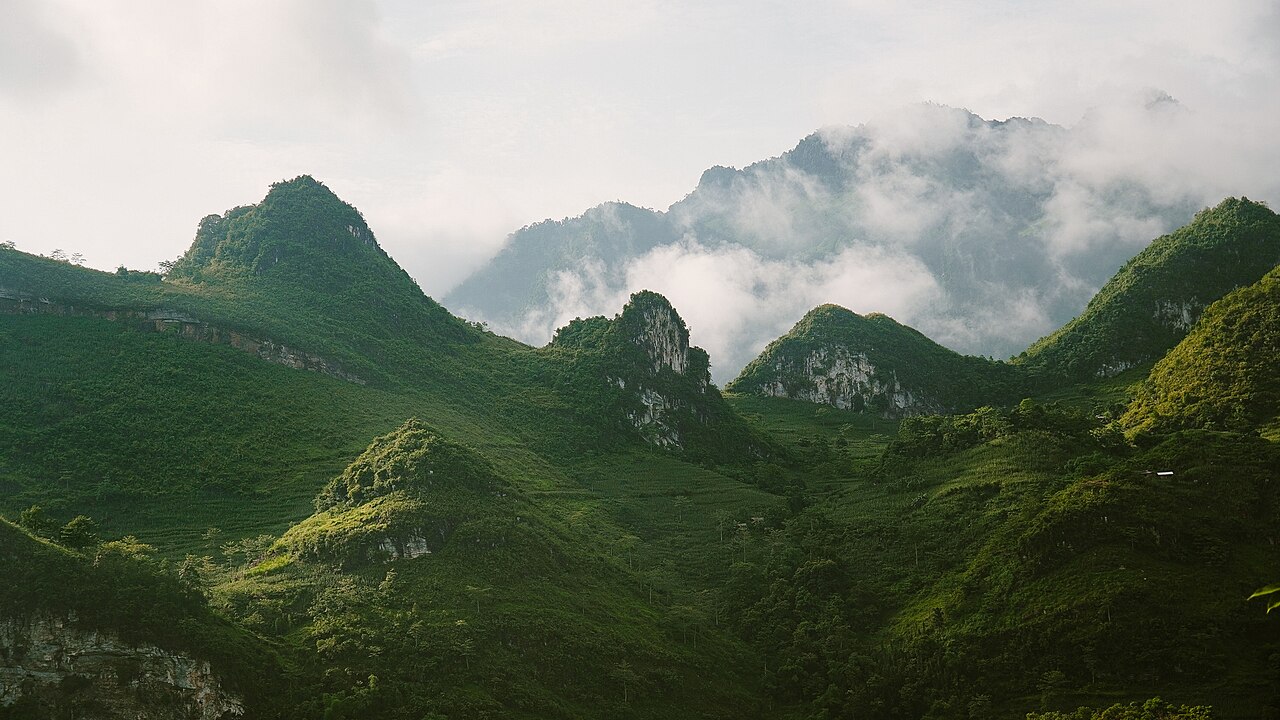
Travelers seeking peaceful nature should follow the dirt track south toward Tham Luong Waterfall (Du Gia Waterfall). The valley widens here into sweeping emerald rice terraces flanked by limestone hills. Stilt lodges along this stream sit 100 to 200 meters back from the village core, replacing nighttime tavern chatter with the gentle rhythm of flowing water and cicadas.
Rooms in this zone feature wider private balconies and attached ensuite bathrooms with hot water shower units. You can walk straight from your bedroom along dirt paths to the waterfall swimming hole in 15 minutes, beating the mid-day tour groups. Expect to pay 350,000 to 600,000 VND ($14.00 – $24.00 USD) per night for a double private room.
Essential Du Gia Stilt House Logistics
- Acoustic Insulation: Traditional Tay stilt houses feature open timber construction. Sound carries easily between partitions. Pack foam earplugs if you sleep lightly.
- Cash Preparation: Du Gia has zero working international bank ATMs. Bring at least 1,500,000 VND ($60.00 USD) in cash per traveler to settle room bills, meals, fuel, and guiding fees.
- Road Surface Precautions: Provincial Road DT176 between Meo Vac and Du Gia undergoes periodic monsoon landslides. Check recent rider reports before departing Meo Vac in heavy rain.
Arrival Logistics & Transport Navigation
Arriving in Du Gia Valley smoothly requires choosing the right transit mode from regional arrival hubs to your accommodation door:
- Railway & Bus Hub Connection: Arriving travelers land at Ha Giang City Bus Station (starting point for the Ha Giang Loop), located approximately 70 km southeast of Ha Giang City via DT176 and DT181 mountain passes. Standard meter taxi fares run Motorbike rental runs 150,000–220,000 VND per day; local easy rider guides charge 700,000–900,000 VND daily. Always choose metered operators (Mai Linh, Vinasun) or book via ride-hailing apps (Grab, Be) to eliminate fare negotiations.
- Airport Transit Options: The closest air facility is Noi Bai Airport (HAN) in Hanoi, located 340 km overland. Reliable door-to-door transit runs 300,000–450,000 VND via overnight VIP sleeper bus to Ha Giang hub. Many boutique properties arrange pre-booked airport pickups that meet you outside the arrivals hall with personalized name boards.
- Night Bus Terminal Protocols: Long-distance sleeper routes typically terminate at Du Gia village bridge crossroad. Early morning arrivals (between 04:30 and 06:00) can leave luggage safely at hotel reception lobbies before daytime check-in opens.
- Local Scam Prevention: Inspect homestay motorcycle rentals thoroughly for functioning front/rear brakes and tire tread depth before ascending rocky mountain roads.
Base Selection Matrix: Matching Your Travel Style
Different parts of Du Gia Valley cater to contrasting visitor priorities. Review this strategic breakdown to select your optimal neighborhood anchor:
| Traveler Profile | Recommended Base | Key Advantages | Trade-Offs to Consider |
|---|---|---|---|
| First-Time Visitors | Central Downtown / Primary Tourist Corridor | High walkability, dense restaurant choices, effortless tour pickups, bilingual hotel front desks. | Higher street noise levels; room rates carry modest tourist area premiums. |
| Couples & Leisure Seekers | Riverside, Coastal or Heritage Perimeter | Tranquil resort grounds, private balconies, scenic water or garden views, on-site spas. | Short taxi trips (40,000–80,000 VND) required to reach busy evening street food markets. |
| Budget & Solo Backpackers | Local Market Wards & Backpacker Clusters | Affordable dorms and private rooms (200,000–450,000 VND), social cafes, inexpensive laundromats. | Modest room sizes; basic soundproofing during early morning market deliveries. |
| Remote Workers & Slow Travelers | Residential Boutique Enclaves | Stable high-speed optical fiber WiFi (80–120 Mbps), kitchenettes, monthly rental discounts. | Requires renting a 110cc scooter (130,000–180,000 VND/day) for independent daily mobility. |
Check-in Regulations & Guest Protocols (2026 Verification)
Vietnamese lodging operations follow specific administrative and security guidelines. Keeping these practical considerations in mind ensures effortless hotel check-ins:
- Mandatory Police Guest Registration: Vietnamese law requires all licensed accommodation providers (from 5-star properties down to rural homestays) to register foreign guests on the local public security database within 24 hours of arrival. You must present an original valid passport and Vietnam entry visa (or eVisa confirmation document). Reception staff will photocopy or scan your documents and promptly return the physical passport.
- Standard Check-in & Check-out Windows: Standard hotel check-in across Vietnam commences at 14:00, with check-out scheduled between 11:30 and 12:00. If your sleeper train or bus arrives at dawn, most hotels store backpacks in locked luggage rooms free of charge while you explore nearby morning noodle stalls. Guaranteed early check-in before 08:00 typically incurs a 50% day-rate surcharge.
- Deposit Practices & Payment Options: Mid-range and luxury properties routinely request a temporary room key deposit of 500,000–1,000,000 VND ($20–$40 USD) in cash, or place an equivalent temporary hold on an international credit card (Visa, Mastercard). Cash deposits are returned in full during room inspection at check-out. Credit card pre-authorizations release back into your account within 7 to 14 banking days.
- Keycard Electricity Controls & Room Etiquette: Guest rooms utilize electronic keycards for master circuit activation. When leaving your room, air conditioning compressors automatically shut down to comply with national green energy conservation standards. Tap water across Vietnam is non-potable; reputable hotels supply two complimentary 350ml glass bottles of purified water daily or feature filtered water refill dispensers in common corridors.
Frequently Asked Questions
Do homestays in Du Gia provide private bathrooms?
Many newly built private bungalows now offer ensuite western toilets and hot showers. However, classic wooden stilt dormitories typically utilize clean shared bathroom blocks on the ground level.
How far is the waterfall from village accommodations?
Tham Luong Waterfall sits approximately 4 kilometers southwest of Du Gia center. A short 10-minute motorcycle ride over gravel leads to the trailhead parking area (10,000 VND parking fee).
Is food included in the nightly room rate?
Basic breakfast (banana pancakes or noodle soup with coffee) is usually included. Nightly family dinners are billed separately at 100,000 to 140,000 VND ($4.00 – $5.60 USD) per person.
Can I ride directly from Du Gia back to Ha Giang City?
Yes. The ride from Du Gia to Ha Giang City via Road DT181 and Highway QL4C takes roughly 2.5 to 3.5 hours across 72 kilometers of paved mountain roads and river valley passes.
Where to Go Next
Du Gia completes the southern arc of the mountain circuit. Compare other provincial stops with our where to stay in Ha Giang guide, review northern fortress bases in where to stay in Dong Van, inspect canyon lodgings in where to stay in Meo Vac, or plan the entire loop circuit using our comprehensive Ha Giang Loop planning guide.
Connected Destinations along the Northern Highlands Frontier
Continue your Vietnam route seamlessly with verified transit times and natural regional connections.
Ha Giang Extreme Loop
Ride through Ma Pi Leng pass, Dong Van Karst Plateau, and rugged ethnic frontiers.
Mu Cang Chai Terraced Valleys
Witness Vietnam's most photogenic golden terraced hillsides and serene ethnic homestays.
Pu Luong Nature Reserve
Tranquil waterwheels, terraced limestone valleys, and traditional Thai stilt house homestays.