Where to Stay in Ha Tien (2026): Pier Hotels & Beach Bases
Deciding where to stay in Ha Tien depends on your onward travel schedule. Sitting on the Gulf of Thailand near the Cambodian border gate of Prek Chak, this southwestern town serves as the primary departure hub for high-speed ferries crossing to Phu Quoc Island. Travelers catching early 07:15 AM Superdong or Phu Quoc Express catamarans need walking access to the To Chau riverfront piers, while visitors pausing for two days to explore limestone caves and coastal seafood markets enjoy quiet seaside resorts along Mui Nai beach.
The Concierge Verdict
Choose a downtown riverfront hotel along Tran Phu Street if your primary goal is boarding an early morning speedboat to Phu Quoc or making a smooth overland border crossing into Kep, Cambodia. Staying within 400 meters of the ferry terminal avoids morning taxi hassles in tropical rainstorms. If you plan to spend 48 hours exploring the Mac Cuu family tombs, Thach Dong cave temple, and sunset seafood stalls, book a seaside bungalow at Mui Nai beach, located 6 kilometers west of town.
Neighborhood Base Comparison
| Base Area | Best For | Nightly Rates (VND / USD) | Ferry Proximity | Vibe & Surroundings |
|---|---|---|---|---|
| Downtown Ferry Pier | Early boat departures & night market | 320,000 – 750,000 VND ($13 – $30 USD) | 2 to 5-minute walk | Lively riverfront, morning markets |
| Mui Nai Beach | Seaside relaxation & seafood shacks | 480,000 – 1,300,000 VND ($19 – $52 USD) | 6 km (10-minute taxi) | Quiet gulf waters, gentle waves |
| Dong Ho Estuary & Hills | Nature walks & quiet cycling | 350,000 – 800,000 VND ($14 – $32 USD) | 3 km (5-minute taxi) | Mangrove edges, mountain views |
| Border Corridor (Xa Xia) | Trans-Cambodia overland staging | 250,000 – 450,000 VND ($10 – $18 USD) | 7 km north of pier | Quiet frontier road, minimal dining |
1. Downtown Ferry Pier: Strategic Transit Stays
The downtown area hugs the northern bank of the Giang Thanh River near its entrance into the sea. This compact grid of streets allows travelers to check in, stroll to dinner at the night market, and walk directly to their morning ferry departure without booking local taxis.
River Hotel Ha Tien on Tran Phu Street charges 650,000 to 950,000 VND ($26 – $38 USD) per night, offering river-view balconies, reliable elevator access, and English-speaking reception staff who print boarding passes. For budget backpackers, Ha Tien Happy Hotel and Hai Yen Guest House offer clean private double rooms with cold air conditioning, hot showers, and strong Wi-Fi for 320,000 to 450,000 VND ($13 – $18 USD).
2. Mui Nai Beach: Coastal Downtime
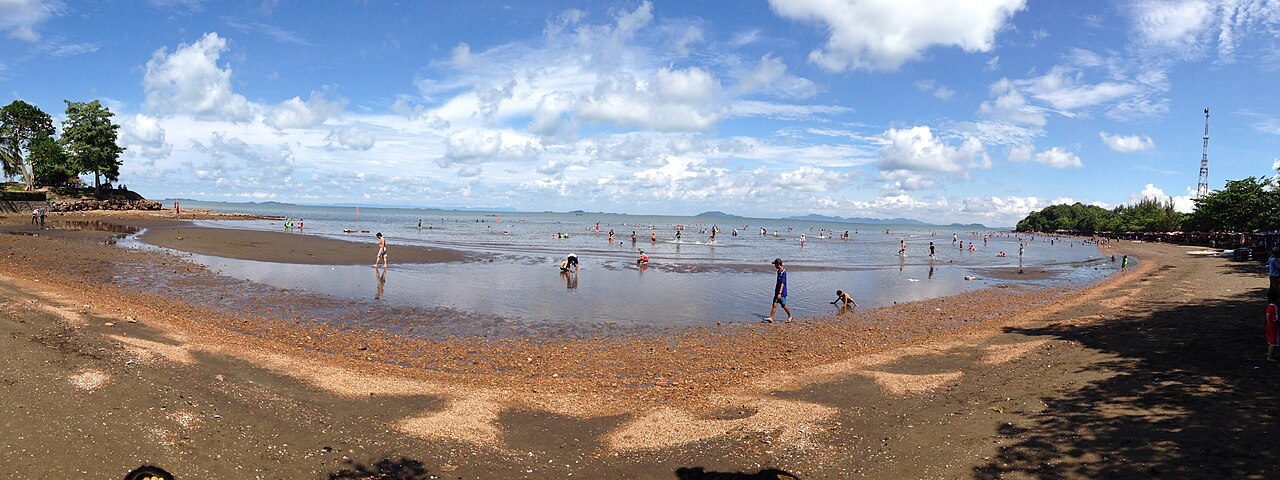
Positioned six kilometers west of downtown, Mui Nai represents Ha Tien’s primary beach area. Dark alluvial sand slopes gently into calm Gulf of Thailand waters, making it safe for swimming year-round. While the water is not as clear as Phu Quoc’s turquoise bays, the shore features sea breezes and open-air wooden seafood restaurants.
Ha Tien Resort and Mui Nai Resort feature beachfront rooms and garden villas priced between 550,000 and 1,200,000 VND ($22 – $48 USD). Guests wake up to ocean views and can rent bicycles or scooters to reach the nearby mountain coaster at Ta Pang hill.
3. Dong Ho Estuary: Scenic Waterways
Dong Ho is an expansive tidal lagoon east of downtown bordered by mangrove channels and fish farming ponds. Guesthouses here cater to travelers who appreciate quiet mornings and birdwatching.
Homestays along the lagoon charge 350,000 to 600,000 VND ($14 – $24 USD) per night and frequently provide complimentary kayaks and bicycles for pedaling out to Thach Dong limestone grotto, where Buddhist shrines sit inside natural caverns.
Crucial Logistics & Border Tips
Ferry tickets during Vietnamese national holidays (Tet and April 30) sell out days ahead. Book your Superdong (230,000 VND / $9.20 USD) or Phu Quoc Express (340,000 VND / $13.60 USD) ticket online at least one week in advance. For travelers crossing into Cambodia via the Ha Tien / Prek Chak border gate, the border post opens daily from 07:00 to 18:00. Most downtown hotels can arrange shared passenger vans to Kampot (approx 200,000 VND / $8.00 USD per person).
Arrival Logistics & Transport Navigation
Arriving in Ha Tien smoothly requires choosing the right transit mode from regional arrival hubs to your accommodation door:
- Railway & Bus Hub Connection: Arriving travelers land at Ha Tien Interprovincial Bus Station on National Highway 80, located approximately 1.8 km from Dong Ho lake and riverside market. Standard meter taxi fares run 30,000–45,000 VND. Always choose metered operators (Mai Linh, Vinasun) or book via ride-hailing apps (Grab, Be) to eliminate fare negotiations.
- Airport Transit Options: The closest air facility is Rach Gia Airport (VKG) or Can Tho International Airport (VCA), located 90 km from Rach Gia / 160 km from Can Tho. Reliable door-to-door transit runs 140,000–180,000 VND via FUTA express coaches. Many boutique properties arrange pre-booked airport pickups that meet you outside the arrivals hall with personalized name boards.
- Night Bus Terminal Protocols: Long-distance sleeper routes typically terminate at Ha Tien Ferry Pier (Bến Tàu Hà Tiên) connecting to Phu Quoc. Early morning arrivals (between 04:30 and 06:00) can leave luggage safely at hotel reception lobbies before daytime check-in opens.
- Local Scam Prevention: At the Ha Tien international border crossing with Cambodia, decline touts claiming visa forms require mandatory processing fees beyond official rates.
Base Selection Matrix: Matching Your Travel Style
Different parts of Ha Tien cater to contrasting visitor priorities. Review this strategic breakdown to select your optimal neighborhood anchor:
| Traveler Profile | Recommended Base | Key Advantages | Trade-Offs to Consider |
|---|---|---|---|
| First-Time Visitors | Central Downtown / Primary Tourist Corridor | High walkability, dense restaurant choices, effortless tour pickups, bilingual hotel front desks. | Higher street noise levels; room rates carry modest tourist area premiums. |
| Couples & Leisure Seekers | Riverside, Coastal or Heritage Perimeter | Tranquil resort grounds, private balconies, scenic water or garden views, on-site spas. | Short taxi trips (40,000–80,000 VND) required to reach busy evening street food markets. |
| Budget & Solo Backpackers | Local Market Wards & Backpacker Clusters | Affordable dorms and private rooms (200,000–450,000 VND), social cafes, inexpensive laundromats. | Modest room sizes; basic soundproofing during early morning market deliveries. |
| Remote Workers & Slow Travelers | Residential Boutique Enclaves | Stable high-speed optical fiber WiFi (80–120 Mbps), kitchenettes, monthly rental discounts. | Requires renting a 110cc scooter (130,000–180,000 VND/day) for independent daily mobility. |
Check-in Regulations & Guest Protocols (2026 Verification)
Vietnamese lodging operations follow specific administrative and security guidelines. Keeping these practical considerations in mind ensures effortless hotel check-ins:
- Mandatory Police Guest Registration: Vietnamese law requires all licensed accommodation providers (from 5-star properties down to rural homestays) to register foreign guests on the local public security database within 24 hours of arrival. You must present an original valid passport and Vietnam entry visa (or eVisa confirmation document). Reception staff will photocopy or scan your documents and promptly return the physical passport.
- Standard Check-in & Check-out Windows: Standard hotel check-in across Vietnam commences at 14:00, with check-out scheduled between 11:30 and 12:00. If your sleeper train or bus arrives at dawn, most hotels store backpacks in locked luggage rooms free of charge while you explore nearby morning noodle stalls. Guaranteed early check-in before 08:00 typically incurs a 50% day-rate surcharge.
- Deposit Practices & Payment Options: Mid-range and luxury properties routinely request a temporary room key deposit of 500,000–1,000,000 VND ($20–$40 USD) in cash, or place an equivalent temporary hold on an international credit card (Visa, Mastercard). Cash deposits are returned in full during room inspection at check-out. Credit card pre-authorizations release back into your account within 7 to 14 banking days.
- Keycard Electricity Controls & Room Etiquette: Guest rooms utilize electronic keycards for master circuit activation. When leaving your room, air conditioning compressors automatically shut down to comply with national green energy conservation standards. Tap water across Vietnam is non-potable; reputable hotels supply two complimentary 350ml glass bottles of purified water daily or feature filtered water refill dispensers in common corridors.
Frequently Asked Questions
How far are downtown hotels from the Phu Quoc ferry dock?
Hotels along Tran Phu and Bach Dang streets sit within 200 to 500 meters of the fast ferry terminal, requiring a flat 3 to 5-minute walk with luggage.
Is Mui Nai beach suitable for swimming?
Yes, the gulf waters at Mui Nai are calm with gentle waves. Alluvial runoff means water has a brownish tint rather than clear turquoise, but local currents remain safe.
Can hotels store my luggage during a day trip to Cambodia?
Most downtown riverfront hotels provide secure luggage storage for 30,000 to 50,000 VND ($1.20 – $2.00 USD) per day if you return to stay another night.
Where to go next
- Where to Stay in Phu Quoc: Beach resorts, sunset hotels, and town bases on Bai Dai and Bai Truong.
- Ha Tien to Phu Quoc Ferry: Superdong vs Phu Quoc Express fast catamarans, timetables, and pier logistics.
- Where to Stay in Can Tho: Ninh Kieu riverside hotels and Mekong farmstays.
- Phu Quoc Ferry Guide: Fast catamaran timetables, fares, and vehicle ferry advice.
- Can Tho to Ha Tien Transport: Overland FUTA buses and shared minivans from Can Tho.
- Rach Gia to Phu Quoc Ferry: Superdong vs Phu Quoc Express fast catamaran guide.
- Where to Stay in Rach Gia: Fast ferry passenger harbor hotels and city stays.
- Southern Vietnam Itinerary: 7-day coastal and Mekong Delta travel circuit.
Connected Destinations along the Mekong Delta Riverine Network
Continue your Vietnam route seamlessly with verified transit times and natural regional connections.
Cai Rang Floating Market (Can Tho)
Experience authentic morning trading from wooden riverboats with fresh noodle soup and iced coffee on the water.
Chau Doc & Tra Su Forest
Glide along canal passages under emerald melaleuca canopies, visit stilt-house Cham villages.
Phu Quoc Island Speed Ferry Connection
Transition directly from delta riverways to the beaches and seaside resorts of Phu Quoc.