Where to Stay in Kon Tum (2026): Best River & Town Stays
Deciding where to stay in Kon Tum places you at the northern frontier of Vietnam’s Central Highlands along the southward-flowing Dak Bla River. Unlike heavily visited highland centers like Da Lat, Kon Tum retains an unhurried, authentic atmosphere characterized by French-colonial religious architecture and indigenous Bahnar, Sedang, and Giarai tribal culture. Whether you arrive by road from Pleiku or conclude a motorbike trek across the Truong Son mountains, choosing the right base enhances your highland stay.
The Concierge Verdict
Choose a central riverfront hotel along Nguyen Hue or Phan Chu Trinh Street if you stay for one or two nights. You can walk to the 1913 French-built Wooden Church and sample wild leaf salad (gỏi lá) featuring over forty forest herbs for 120,000 to 180,000 VND ($4.80 – $7.20 USD). Clean river-view rooms cost 350,000 to 750,000 VND ($14 – $30 USD). If you seek cultural immersion, book a traditional wooden stilt homestay in the Bahnar village of Kon K’tu along the riverbanks, where family-hosted dinners cost 100,000 to 150,000 VND ($4 – $6 USD) per guest.
Kon Tum Neighborhood & Village Comparison
| Area District | Best Suited For | Nightly Rates (VND / USD) | Distance to Wooden Church | Atmosphere & Setting |
|---|---|---|---|---|
| Dak Bla Riverfront & Town Center | First-time visitors, dining & walking tours | 350,000 – 850,000 VND ($14 – $34 USD) | 500 to 1,200 meters | River walkways, leafy French avenues, local cafes |
| Kon K’tu Bahnar Village | Tribal culture, gong music & canoe rides | 200,000 – 450,000 VND ($8 – $18 USD) | 6 km east along river | Thatched communal Rong houses, quiet dirt lanes |
| Kon Klor Suspension Bridge Area | Riverside dining & cycling routes | 300,000 – 600,000 VND ($12 – $24 USD) | 2 km east | Suspension bridge views, sugar cane fields |
| Mang Den Plateau (Outskirts) | Pine forest cooler air & eco-resorts | 450,000 – 1,400,000 VND ($18 – $56 USD) | 55 km northeast | High-altitude pine ridges, misty waterfalls |
1. Central Town & Dak Bla Riverfront
Kon Tum’s compact city grid lies on the northern bank of the Dak Bla River. Staying in the urban center around Nguyen Hue, Tran Phu, and Ba Trieu streets provides effortless access to top architectural landmarks. Streets are quiet. Exploring on foot is simple.
Indochine Hotel Kon Tum is the standout full-service accommodation in town, located right on the riverbank. It features modern double rooms from 700,000 to 1,200,000 VND ($28 – $48 USD). The property showcases a riverside dining pavilion constructed entirely of arched bamboo poles designed by famed architect Vo Trong Nghia. The craftsmanship is striking. For budget-conscious travelers, family-run guesthouses like Window Hotel and Hnam Chang Ngeh offer spotless air-conditioned rooms for 300,000 to 500,000 VND ($12 – $20 USD).
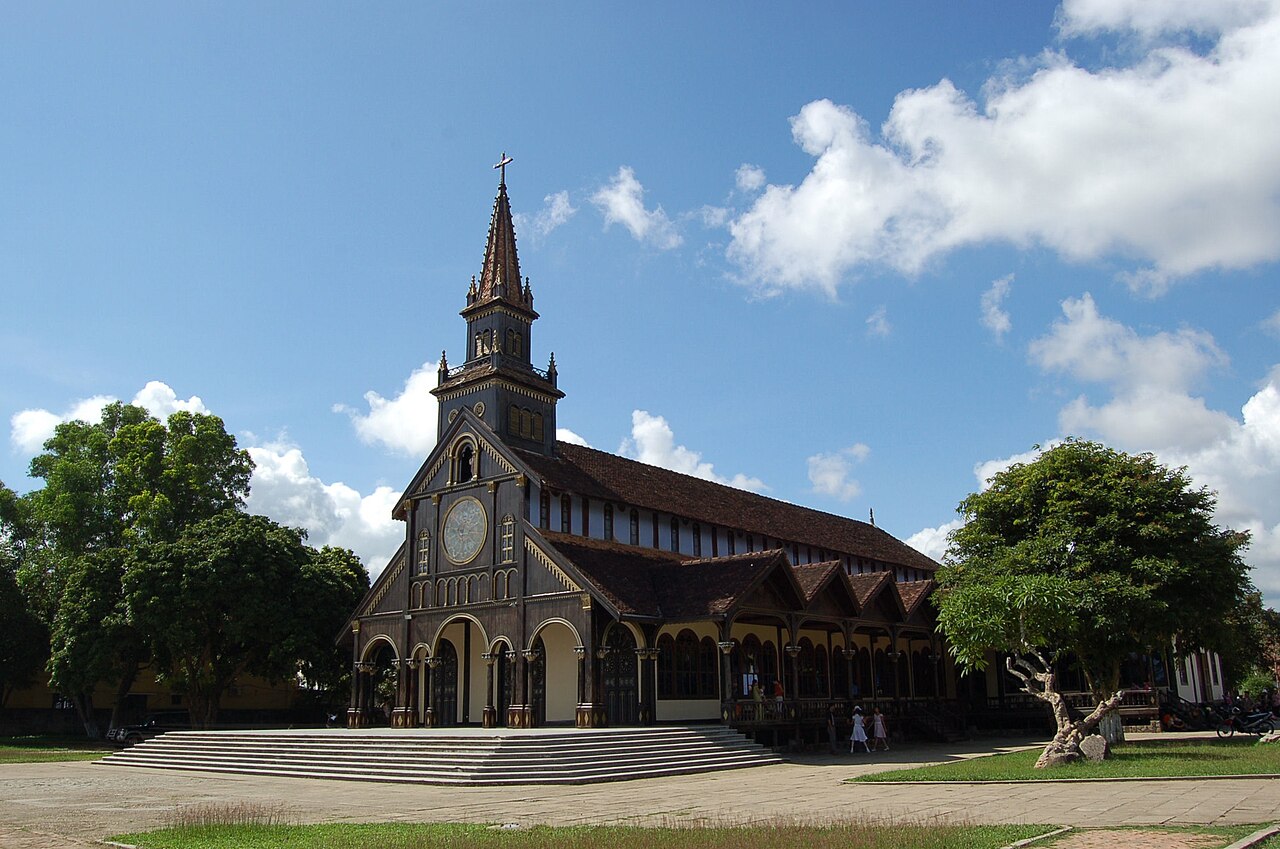
From central hotels, you can stroll 10 minutes to the Kon Tum Wooden Church (Nhà thờ Gỗ). Built in 1913 by French missionaries using ironwood without a single nail, the cathedral blends Romanesque arches with traditional Bahnar stilt-house styling. The interior woodwork is magnificent.
2. Kon K’tu & Kon Klor: Bahnar Tribal Stays
To experience indigenous highland customs firsthand, cross the yellow Kon Klor suspension bridge. This settlement ranks among the oldest surviving Bahnar communities in Gia Lai and Kon Tum provinces, anchored by a towering thatched-roof communal house (Nhà Rông) that rises 25 meters above the village square. Village life feels timeless.
Community homestays such as Kon K’tu Homestay and Rong House Lodge charge 200,000 to 400,000 VND ($8 – $16 USD) for comfortable mattresses beneath woven bamboo roofs. Bahnar elders welcome guests with rice wine sipped through bamboo reeds from ceramic jars (rượu cần), accompanied by roasted mountain pork. You can arrange a traditional dug-out wooden canoe trip down the Dak Bla River for 150,000 to 200,000 VND ($6 – $8 USD) per hour.
3. Mang Den Eco-Plateau Extension
Travelers who have an extra two days frequently continue 55 kilometers northeast up National Route QL24 to Mang Den (explore our dedicated where to stay in Mang Den guide). Sitting at an altitude of 1,200 meters, Mang Den enjoys average temperatures of 18°C to 22°C (64°F – 72°F) and is surrounded by dense pine forests and seven natural lakes.
Boutique forest villas and eco-lodges like Golden Boutique Hotel and De Vivre Mang Den offer fireplace suites and garden views for 600,000 to 1,500,000 VND ($24 – $60 USD). It serves as a peaceful mountain retreat before heading down toward Quang Ngai and the central coastline.
Highland Transport & Scooter Logistics
Kon Tum has no commercial civil airport. The nearest operating terminal is Pleiku Airport (PXU), located 45 kilometers south. Local public buses run every 20 minutes between Pleiku and Kon Tum along four-lane National Route QL14, charging 35,000 to 50,000 VND ($1.40 – $2 USD) for a 60-minute ride. A private metered taxi between Pleiku Airport and downtown Kon Tum costs 450,000 to 550,000 VND ($18 – $22 USD).
To explore the outlying villages and the Dak To battlefield memorials, rent a 110cc semi-automatic scooter from your hotel reception for 120,000 to 160,000 VND ($4.80 – $6.40 USD) per day. Roads around Kon Tum are flat, wide, and carry far less traffic than coastal highways.
Frequently Asked Questions
Do I need an entry permit to visit Bahnar villages in Kon Tum?
Standard visits to Kon K’tu and Kon Klor villages no longer require police travel permits. However, if you plan to hike into remote border communes near the Cambodia-Laos tri-border junction at Bo Y, you must register your passport at the Kon Tum Provincial Police Immigration Office.
What local dish must I try while staying in Kon Tum?
Do not miss Goi La (gỏi lá), Kon Tum’s signature wild leaf salad. You roll pork belly, boiled river shrimp, and fermented pork inside three to five layers of wild forest leaves, topped with a warm sauce made from fermented sticky rice and ground pork liver.
When is the best season to visit Kon Tum?
The dry season extends from November through April, providing clear sunny days and cool evenings. December is especially vibrant because local Catholic Bahnar communities celebrate Christmas with elaborate festival dances and gong performances at the Wooden Church.
Where to go next
- Pleiku to Kon Tum Transport: Frequent 50-minute public buses and airport taxis.
- Kon Tum to Da Nang Transport: Limousine vans and sleeper coaches via Ho Chi Minh Highway.
- Where to Stay in Mang Den: Pine forest wooden chalets, Pa Sy waterfall eco-lodges, and boutique hotels.
- Mang Den Travel Guide: Pa Sy waterfall, pine forest trails, and highland cultural villages.
- Where to Stay in Pleiku: City hotels, Bien Ho volcanic crater lake, and tea estates.
- Buon Ma Thuot to Pleiku Transport: Minivans, buses, and coffee highway advice.
- Central Highlands Vietnam Itinerary: Complete overland circuit from Da Lat to Kon Tum.
- Vietnam Scooter Rental Checklist: Mechanical safety, deposit policies, and brake testing.
Connected Destinations along the Central Highlands & Pine Plateaus
Continue your Vietnam route seamlessly with verified transit times and natural regional connections.
Mang Den Pine Plateau
Misty pine forests, cool year-round climate, untouched waterfalls, and serene mountain homestays.
Buon Ma Thuot Coffee Capital
Volcanic basalt soil, shade-grown robusta plantations, world coffee museum, and Dray Nur waterfalls.
Nha Trang Coastal Descent
Descend scenic mountain hairpins from 1,500m pine forests to turquoise coastal beaches in Nha Trang.