Where to Stay in Lang Co (2026): Beach & Lagoon Resorts
Selecting where to stay in Lang Co places you along one of central Vietnam’s most dramatic coastal geographic features. Situated in Phu Loc district at the northern foot of Hai Van Pass, Lang Co is framed by the East Sea on one flank and the misty Lap An oyster lagoon beneath the Bach Ma mountains on the other. Located 35 kilometers north of Da Nang and 65 kilometers south of Hue, it offers an idyllic retreat away from crowded tourist centers.
The Concierge Verdict
Book a luxury beachfront villa at Laguna Lang Co (Banyan Tree or Angsana) in Canh Duong Bay for an indulgent retreat costing 4,500,000 to 11,500,000 VND ($180 – $460 USD) per night. If you want authentic central coast flavor without paying luxury rates, choose a beachfront bungalow at Lang Co Beach Resort or a family homestay overlooking Lap An Lagoon for 450,000 to 1,200,000 VND ($18 – $48 USD), placing you minutes from legendary floating oyster restaurants.
Lang Co Accommodation Area Comparison
| Area / Setting | Environment & Geography | Price Range (VND / USD) | Best Suited For | Top Recommended Properties |
|---|---|---|---|---|
| Canh Duong Bay (Laguna) | Private crescent bay, championship golf, luxury villas | 4,500,000 – 12,500,000 VND ($180 – $500 USD) | Honeymooners, golfers, luxury travelers | Banyan Tree Lang Co, Angsana Lang Co |
| Lang Co Peninsula Beach | Broad white sand strand, palm shade, ocean surf | 750,000 – 1,450,000 VND ($30 – $58 USD) | Beach lovers, families, road-trippers | Lang Co Beach Resort, Thanh Tam Seaside Resort |
| Lap An Lagoon & Town Edge | Tranquil mountain reflections, oyster farms, village eateries | 320,000 – 650,000 VND ($12.80 – $26 USD) | Budget travelers, seafood foodies, photographers | Lap An Lagoon Homestay, Ha Phuong Guesthouse |
1. Canh Duong Bay & Laguna: Ultra-Luxury Seclusion
Canh Duong Bay curves gracefully 10 kilometers north of Lang Co town. Shielded by jungle headlands, this private master-planned sanctuary houses central Vietnam’s premier integrated luxury resort development.
Banyan Tree Lang Co offers hilltop and lagoon pool villas decorated with traditional Vietnamese bronze art and lotus motifs for 8,500,000 to 12,500,000 VND ($340 – $500 USD). Adjacent Angsana Lang Co provides spacious beachfront family suites and a 300-meter winding lagoon pool for 4,500,000 to 6,800,000 VND ($180 – $272 USD). Guests enjoy direct access to an 18-hole championship golf course designed by Sir Nick Faldo and private water sports concessions.
2. Lang Co Peninsula Beach: Casual Coastal Resorts
The main spit of Lang Co stretches across 10 kilometers of fine white sand bordered by turquoise surf. Properties here sit directly along Highway QL1A yet open eastward to private beach frontage.
Longtime favorites like Lang Co Beach Resort and Thanh Tam Resort offer low-rise terracotta villas nestled beneath swaying casuarina trees for 750,000 to 1,450,000 VND ($30 – $58 USD). You can step straight from your room onto uncrowded sands where fishing coracles haul in morning catches. This strip is particularly convenient if you arrive by road from Da Nang via the scenic Hai Van Pass.
3. Lap An Lagoon: Oysters, Homestays & Sunset Views
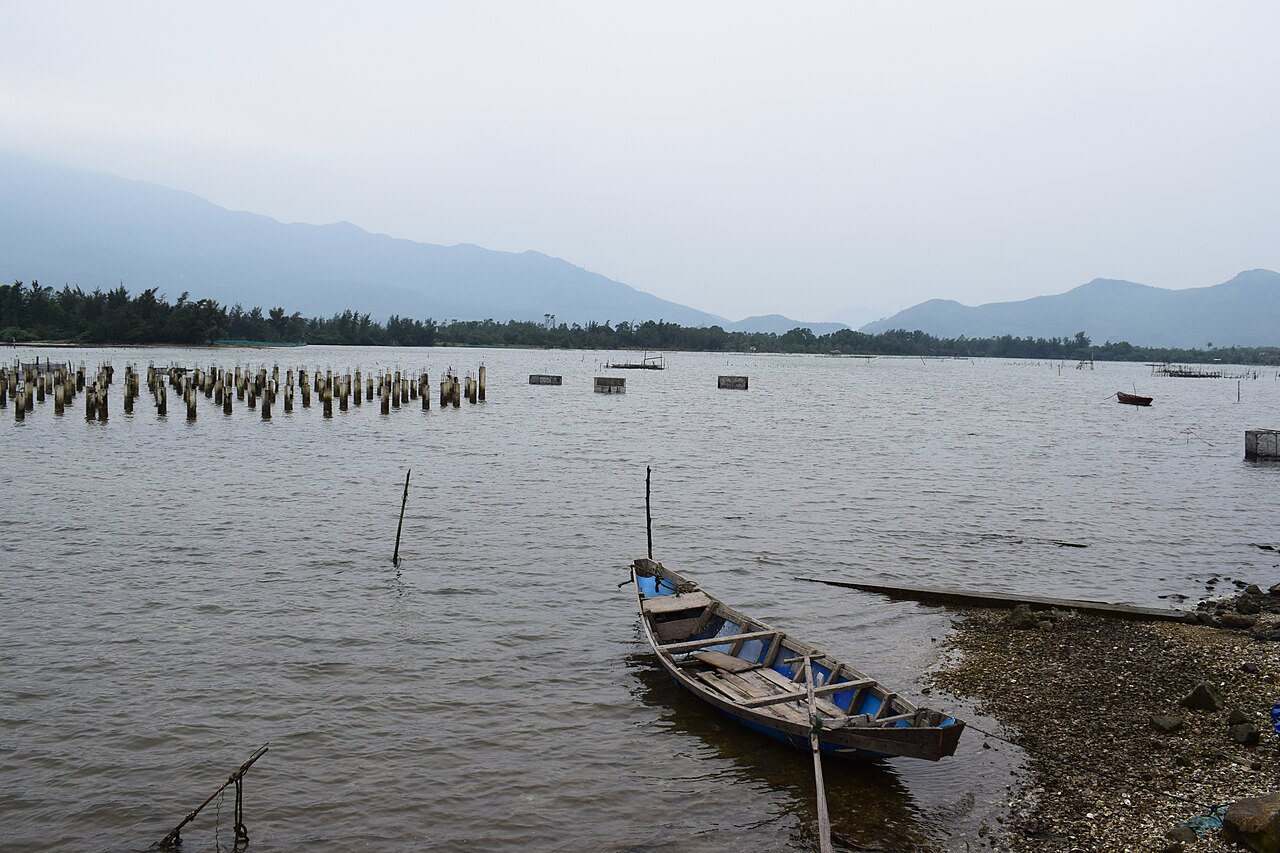
Separated from the open ocean by the sandbar peninsula, Lap An Lagoon (Đầm Lập An) spans 800 hectares of brackish water reflecting the jagged ridges of Bach Ma National Park. The lagoon is renowned across the country for premium oyster farming.
Locally owned homestays and modest guesthouses around the lagoon edge charge 320,000 to 650,000 VND ($12.80 – $26 USD). Stays place you within walking distance of wooden stilt seafood eateries extending over the water. Diners feast on steamed oysters with scallion oil (hàu nướng mỡ hành) for 80,000 to 120,000 VND ($3.20 – $4.80 USD) per kilogram while fishing boats drift across golden sunset waters.
Arrival Logistics & Transport Navigation
Arriving in Lang Co Bay smoothly requires choosing the right transit mode from regional arrival hubs to your accommodation door:
- Railway & Bus Hub Connection: Arriving travelers land at Lang Co Railway Station (quaint rural stop for local commuter trains), located approximately 3 km from the central resort strip. Standard meter taxi fares run 50,000–70,000 VND. Always choose metered operators (Mai Linh, Vinasun) or book via ride-hailing apps (Grab, Be) to eliminate fare negotiations.
- Airport Transit Options: The closest air facility is Da Nang International Airport (DAD), located 35 km across the Hai Van Pass road tunnel. Reliable door-to-door transit runs 450,000–600,000 VND ($18–$24 USD) via private car. Many boutique properties arrange pre-booked airport pickups that meet you outside the arrivals hall with personalized name boards.
- Night Bus Terminal Protocols: Long-distance sleeper routes typically terminate at Highway 1A roadside drop-off points near Lang Co Bridge. Early morning arrivals (between 04:30 and 06:00) can leave luggage safely at hotel reception lobbies before daytime check-in opens.
- Local Scam Prevention: Do not accept unlicensed private taxi touts at Highway 1A intersections; arrange resort transfers ahead of time.
Base Selection Matrix: Matching Your Travel Style
Different parts of Lang Co Bay cater to contrasting visitor priorities. Review this strategic breakdown to select your optimal neighborhood anchor:
| Traveler Profile | Recommended Base | Key Advantages | Trade-Offs to Consider |
|---|---|---|---|
| First-Time Visitors | Central Downtown / Primary Tourist Corridor | High walkability, dense restaurant choices, effortless tour pickups, bilingual hotel front desks. | Higher street noise levels; room rates carry modest tourist area premiums. |
| Couples & Leisure Seekers | Riverside, Coastal or Heritage Perimeter | Tranquil resort grounds, private balconies, scenic water or garden views, on-site spas. | Short taxi trips (40,000–80,000 VND) required to reach busy evening street food markets. |
| Budget & Solo Backpackers | Local Market Wards & Backpacker Clusters | Affordable dorms and private rooms (200,000–450,000 VND), social cafes, inexpensive laundromats. | Modest room sizes; basic soundproofing during early morning market deliveries. |
| Remote Workers & Slow Travelers | Residential Boutique Enclaves | Stable high-speed optical fiber WiFi (80–120 Mbps), kitchenettes, monthly rental discounts. | Requires renting a 110cc scooter (130,000–180,000 VND/day) for independent daily mobility. |
Check-in Regulations & Guest Protocols (2026 Verification)
Vietnamese lodging operations follow specific administrative and security guidelines. Keeping these practical considerations in mind ensures effortless hotel check-ins:
- Mandatory Police Guest Registration: Vietnamese law requires all licensed accommodation providers (from 5-star properties down to rural homestays) to register foreign guests on the local public security database within 24 hours of arrival. You must present an original valid passport and Vietnam entry visa (or eVisa confirmation document). Reception staff will photocopy or scan your documents and promptly return the physical passport.
- Standard Check-in & Check-out Windows: Standard hotel check-in across Vietnam commences at 14:00, with check-out scheduled between 11:30 and 12:00. If your sleeper train or bus arrives at dawn, most hotels store backpacks in locked luggage rooms free of charge while you explore nearby morning noodle stalls. Guaranteed early check-in before 08:00 typically incurs a 50% day-rate surcharge.
- Deposit Practices & Payment Options: Mid-range and luxury properties routinely request a temporary room key deposit of 500,000–1,000,000 VND ($20–$40 USD) in cash, or place an equivalent temporary hold on an international credit card (Visa, Mastercard). Cash deposits are returned in full during room inspection at check-out. Credit card pre-authorizations release back into your account within 7 to 14 banking days.
- Keycard Electricity Controls & Room Etiquette: Guest rooms utilize electronic keycards for master circuit activation. When leaving your room, air conditioning compressors automatically shut down to comply with national green energy conservation standards. Tap water across Vietnam is non-potable; reputable hotels supply two complimentary 350ml glass bottles of purified water daily or feature filtered water refill dispensers in common corridors.
Frequently Asked Questions
Is Lang Co a good base between Da Nang and Hue?
Yes. Staying 1 or 2 nights in Lang Co splits the 100-kilometer transit between Da Nang and Hue into a leisurely holiday. You can hike in Bach Ma National Park, photograph Hai Van Pass viewpoints, and explore oyster lagoons without feeling rushed.
Can I take the train to Lang Co?
Yes. Lang Co Railway Station (Ga Lăng Cô) sits right on the scenic mountain pass rail route. The heritage tourist train connecting Da Nang and Hue stops here daily, offering soft seats for 110,000 to 150,000 VND ($4.40 – $6.00 USD).
When is the best season to stay in Lang Co?
April through August brings calm blue waters, sunny skies, and perfect beach swimming conditions. From late September through December, northeastern monsoons generate rough surf and overcast skies across the bay.
Continue planning:
- Where to Stay in Hue: Citadel boutique hotels, riverside villas, and imperial garden resorts.
- Hotel guide for Da Nang: My Khe beachfront resorts vs Han River city hotels.
- Da Nang to Hue: Train vs Private Car: Scenic Hai Van Pass travel comparison.
- Central Vietnam Itinerary: 7 to 10-day circuit through Da Nang, Hoi An, and Hue.
Connected Destinations along the North-Central & Far North Frontier
Continue your Vietnam route seamlessly with verified transit times and natural regional connections.
Ban Gioc Waterfall & Nguom Ngao Cave
Southeast Asia's largest border waterfall, boat on the Quay Son river, and explore stalactite caverns.
Ba Be Lake Pristine Waters
Kayak through limestone gorges, stay with Tay families in Pac Ngoi stilt houses, and swim in clear freshwater.
Ha Giang Karst Plateau Connection
Connect the Northeast waterfall loop directly to the dramatic passes of Ma Pi Leng and Dong Van.