
Reviewed transport guide – Updated September 15, 2026
Transport Within Vietnam
The best way to move within Vietnam is not one mode. It is the mode that protects the route: fly when distance would eat the trip, use trains when the journey is part of the experience, hire private cars when flexibility changes the day, and keep buses or ferries for routes where they genuinely fit.
Field note: judge every transfer door to door, not by the ticket time alone.
Concierge verdict
For long north-south moves, domestic flights usually buy back the most usable time. For Hanoi-Da Nang or Hue-Da Nang style corridors, trains and private cars can make the transfer feel like part of the trip. Sleeper buses are a budget or specific-corridor answer, not the default premium recommendation.
- Fly: when the alternative would consume a full day or a poor overnight and the route has limited nights.
- Take the train: when scenery, overnight rhythm, or city-center stations add value and you accept slower movement.
- Use a private car or transfer: when stops, luggage, children, late arrivals, or a scenic handoff make flexibility worth paying for.
- Keep live details separate: schedules, fares, ferry weather, baggage rules, and airport pickup points should be checked close to booking.
At a glance
Choose the mode by what the route needs
| Route problem | Best first answer | Why | What to live-check |
|---|---|---|---|
| Hanoi to Ho Chi Minh City, or north to far south | Domestic flight | The overland journey is memorable for some travelers but too expensive in time for most short trips. | Baggage, airport transfer time, delay risk, and separate-ticket connection buffer. |
| Hanoi to Da Nang or Hue, with an overnight available | Train or flight | Train can be a route-style choice; flight is cleaner when the itinerary is already tight. | Cabin class, arrival time, station transfer, and weather around onward plans. |
| Hue, Hai Van Pass, Da Nang, Hoi An | Private car or train plus transfer | The central corridor can turn movement into scenery, food, and a calmer handoff. | Stops, luggage, road timing, driver terms, and poor-weather alternatives. |
| Mekong, islands, or water crossings | Boat or ferry where geography requires it | Water transport is a route tool, not a romance claim; it belongs where the map demands it. | Weather, last departure, port transfer, luggage, seasickness, and cancellation rules. |
| Budget corridor with flexible time | Sleeper bus only after comparison | It can save money on specific routes, but comfort, safety, and arrival fatigue are real costs. | Operator reputation, pickup point, arrival time, seat type, and holiday demand. |
Transport proof: the route changes the answer
These images are included because each one proves a different transport decision. Airports, railway stations, scenic road passes, and river routes do not solve the same planning problem.


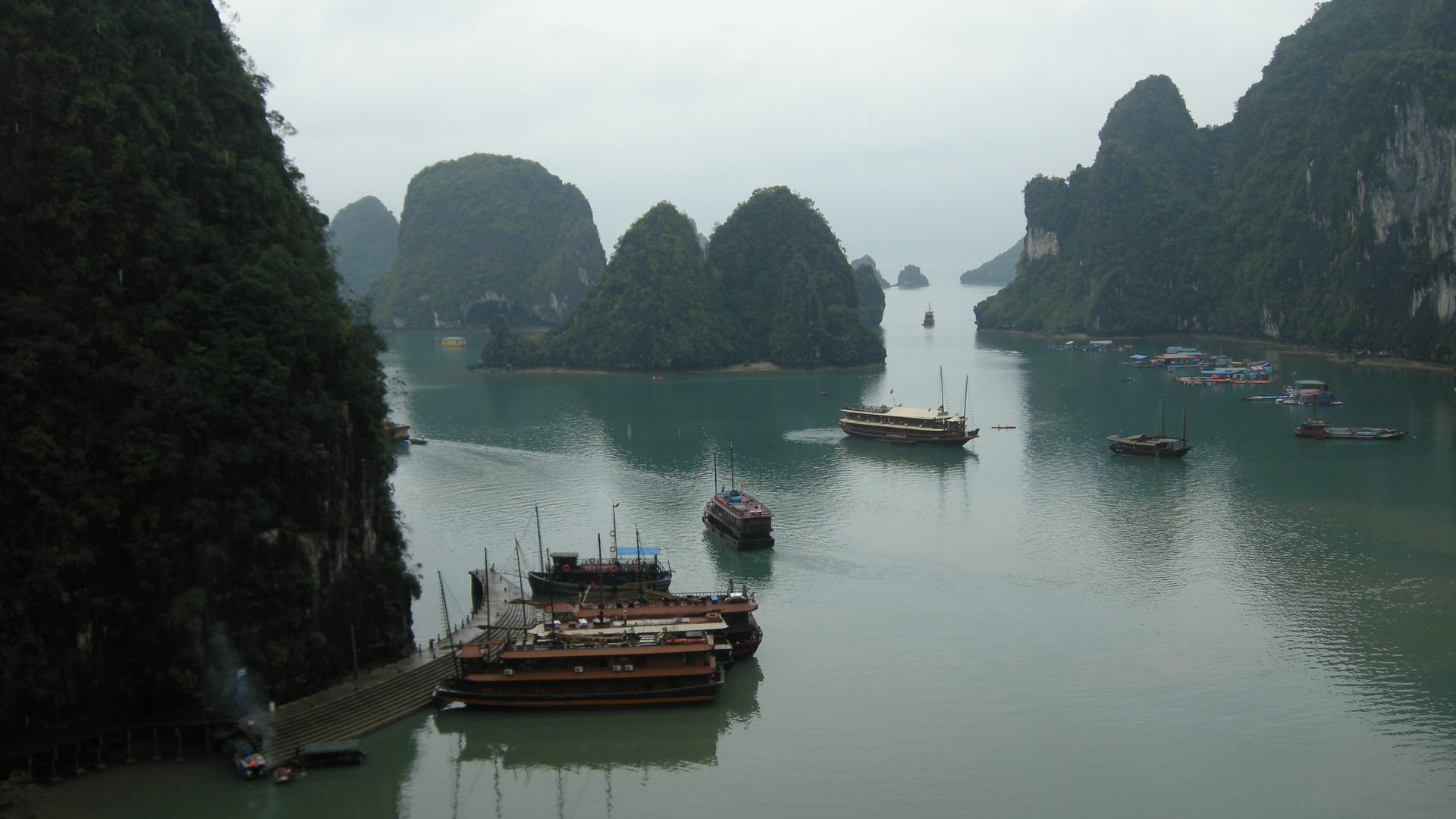
The transport decision in one sentence
Choose the mode that turns the least valuable hours into the best route outcome. A cheap transfer that ruins the next day is not cheap; a flight that forces a bad airport day is not automatically efficient; and a scenic road or train only deserves the time when it improves the trip.
Corridor matrix: what to use on common Vietnam routes
Use this as the evergreen route judgment, then verify live schedules and fares before payment. The goal is not to freeze every timetable into the guide; it is to avoid choosing the wrong mode for the trip shape.
| Corridor | Default premium answer | Good alternative | Use caution with | Editorial reason |
|---|---|---|---|---|
| Hanoi – Ho Chi Minh City | Fly. | Multi-stop train only when the rail journey is the trip. | Single-shot bus or train on a short first trip. | This is a country-length move; most travelers need usable days more than endurance. |
| Hanoi – Da Nang or Hue | Fly if pace is tight; train if the overnight or scenery is intentional. | Split the route with Ninh Binh or Phong Nha only when nights allow. | Late arrivals before a same-day tour or cruise. | The mode should serve the route, not a generic idea of authenticity. |
| Hue – Da Nang – Hoi An | Private car via Hai Van Pass when stops matter. | Train Hue-Da Nang plus a separate Hoi An transfer. | Cheapest shared shuttle if luggage, weather, or timing matters. | This is one of the few transfers that can become a route highlight. |
| Da Nang or Hoi An – Ho Chi Minh City | Fly. | Train only for travelers intentionally slowing the central-south leg. | Sleeper bus unless budget is the main constraint. | The flight usually protects enough time to justify airport friction. |
| Ho Chi Minh City – Mekong – islands | Private car, guided transfer, flight, ferry, or boat depending on final island or river plan. | Bus-plus-boat where time and luggage are flexible. | Last ferry of the day and separate tight connections. | Water and port logistics are the route, so build buffer around them. |
| Airport – first hotel | Prebook or use official taxi/ride-hailing after late arrivals, families, or long-haul flights. | Airport bus when luggage is light and arrival timing is easy. | Unlicensed drivers and unclear pickup points. | Arrival friction sets the tone; spend a little to avoid the first avoidable mistake. |
Transport mode fit guidance
Each mode has a job. The mistake is asking one mode to solve every route. Use this table when your itinerary starts to feel overbuilt.
| Mode | Choose it when | Avoid it when | Premium use case | Live check |
|---|---|---|---|---|
| Domestic flight | The road or rail alternative would cost most of a day or weaken the next experience. | Airport time is longer than the route value or a scenic transfer would be the point. | North-south moves, central-to-south handoffs, or final-night positioning. | Baggage, airport transfer, delay history, and connection buffer. |
| Train | The station locations, overnight rhythm, or scenery add value. | A tired arrival would damage a short itinerary. | Soft sleeper, four-berth cabin, or scenic central segment selected deliberately. | dsvn.vn timing, berth class, ticket name, station, and refund/change rules. |
| Private car or transfer | Flexibility, stops, luggage, children, mobility, or weather protection matters. | It only replaces an easy public option without improving the day. | Hai Van Pass, airport arrivals, Hoi An-Hue, Mekong transfers, or complex family days. | Pickup point, vehicle size, included stops, tolls, child seats, and cancellation terms. |
| Sleeper bus | Budget is the priority and the corridor has a reputable operator and tolerable arrival time. | Comfort, privacy, sleep, or next-day energy is important. | Rare; use it as a deliberate savings choice, not a default. | Seat type, reviews, pickup/drop-off, holiday booking, and arrival hour. |
| Ferry or boat | The route requires water: islands, Mekong, bays, or river days. | Weather, seasickness, or tight onward connections make the day fragile. | Island chapter, private river day, or well-buffered bay/Delta experience. | Weather, last departure, port transfer, luggage, safety policy, and cancellation rules. |
| Airport transfer | Arrival is late, luggage is heavy, or the traveler is tired after a long-haul flight. | You have light luggage, daylight, and a straightforward airport bus. | First-night calm, family arrival, separate-ticket connection, or final-night protection. | Official pickup point, driver contact, flight tracking, tolls, and waiting time. |
What to prebook and what to keep flexible
The right booking order protects scarce or fragile pieces without turning every ordinary day into a non-refundable commitment.
| Transport item | Prebook when | Keep flexible when | What to record |
|---|---|---|---|
| Domestic flights | The route depends on a specific flight, holiday period, or final international connection. | There are many daily options and the route may change after weather or hotel checks. | Baggage allowance, airport, terminal, transfer time, and cancellation/change terms. |
| Train sleeper berths | You need a specific cabin class, holiday date, or overnight route. | A same-day soft seat on a short scenic segment would be enough. | Train number, departure station, berth type, passenger name, ID requirement, and refund policy. |
| Private cars and airport transfers | Arrival is late, group is large, luggage is heavy, or a scenic route needs stops. | You are in a compact city with easy ride-hailing and no fixed handoff. | Driver contact, vehicle size, pickup pin, included stops, tolls, waiting time, and cash/card terms. |
| Sleeper buses | You are traveling during holidays or need a specific operator/seat. | The bus is only a backup to a better flight or train. | Pickup point, drop-off point, seat type, luggage rules, and real arrival hour. |
| Ferries and boats | There are limited departures, island accommodation depends on arrival, or weather windows are narrow. | The water trip is an optional day tour with multiple operators and refundable terms. | Port, departure time, sea-condition policy, luggage, seasickness plan, and last return. |
Before-booking live-check audit
Run this audit before paying for non-refundable flights, train berths, private transfers, ferries, cruises, or hotel nights tied to a fragile transfer.
- Map the full transfer door to door: hotel checkout, taxi, station or airport, waiting time, boarding, arrival, luggage, and final transfer.
- Check official or primary sources for rail, airport, ferry, weather, baggage, and public-holiday details before final payment.
- Confirm whether the next day needs energy. A bad overnight transfer can cost more than a daytime flight.
- Protect the first and last nights. Long-haul arrival and international departure are the worst places to test a fragile transfer.
- Make weather-sensitive water or mountain plans refundable where possible, especially around ferries, boats, bay cruises, and scenic passes.
- Save offline copies of tickets, pickup instructions, operator phone numbers, hotel address, and the local-language destination.
- Budget for the hidden costs: airport transfers, tolls, baggage, meals, early check-in, late checkout, and a taxi after an awkward arrival.
Transport mistakes that waste time or money
Most Vietnam transport mistakes are not dramatic. They are small optimistic assumptions that compound: too many bases, weak arrival transfers, cheap overnight movement, or no buffer before the one day that matters.
| Mistake | Why it happens | Better move | What it protects |
|---|---|---|---|
| Comparing only ticket time | A one-hour flight looks simple and a train looks slow. | Compare door-to-door hours and the quality of the next day. | Energy, hotel timing, and realistic pacing. |
| Using sleeper buses as the default | They look cheap and seem to save a hotel night. | Use them only when the operator, seat, pickup, and arrival time still make sense. | Sleep, safety margin, and the next day’s experience. |
| Making every transfer private | Premium is mistaken for never using public or shared transport. | Spend on private support where it changes the day; use trains or flights when they solve the route better. | Budget and authenticity without sacrificing comfort. |
| Forgetting the airport transfer | The intercity ticket gets booked, but the first and last 30 kilometers are ignored. | Plan arrival and departure transfers as part of the same decision. | Late-night calm, families, luggage, and connection buffer. |
| Trusting old ferry or train details | Copied schedules circulate long after conditions change. | Use evergreen mode guidance, then live-check official or operator sources close to travel. | Island plans, rail seats, weather pivots, and refunds. |
Short answers for common Vietnam transport decisions
Should I fly or take the train from Hanoi to Da Nang?
Fly if the itinerary is tight or the next day matters. Take the train when the overnight rhythm, city-center station, or scenic journey is part of the route. Check dsvn.vn for current train options before treating rail as the answer.
Are domestic flights the best way to travel Vietnam?
Domestic flights represent the highest efficiency choice for long north-to-south transfers, especially on 10-day or 14-day routes. Conversely, air travel offers little advantage on short central corridors like Da Nang to Hue, where scenic coastal trains add genuine travel value.
Are sleeper buses worth it in Vietnam?
Sometimes, but mostly as a budget or specific-corridor option. They can save money, but comfort, pickup points, safety margin, and next-day fatigue should be priced into the decision.
When should I prebook airport transfers?
Prebook when arriving late, traveling with family, carrying heavy luggage, connecting on separate tickets, or heading straight to a distant hotel. Keep it flexible when you have daylight, light luggage, and a simple city arrival.
How should I think about ferries and boats?
Use them where geography requires them: islands, bays, and river routes. Treat weather, last departure, port transfers, seasickness, luggage, and cancellation policy as live details rather than evergreen promises.
Where this guide fits in the planning chain
Start with the Vietnam Travel Guide for the full planning order, then use Best Time to Visit Vietnam before weather-sensitive routes, 10 Days in Vietnam or 14 Days in Vietnam to test pacing, and Vietnam Travel Cost before paying for high-friction transfers.
Connected Destinations along the Classic Vietnam Grand Route
Continue your Vietnam route seamlessly with verified transit times and natural regional connections.
Hanoi & Northern Karsts
Begin in Hanoi with Old Quarter food alleys before cruising Ha Long Bay and cycling Ninh Binh.
Central Heritage Corridor
Immerse in lantern-lit Hoi An, imperial palaces in Hue, and sandy beaches in Da Nang.
Southern Riverine Route
Experience Saigon's energy, historic Cu Chi tunnels, and sampan waterways in the Mekong Delta.