Route shape before city names
Best Vietnam Routes for First-Time Visitors: North, Central, South or Open-Jaw?
The best first Vietnam route is not the one that touches the most famous places. It is the one that gives each night a job: recover after the flight, protect a countryside morning, hold a bay night, keep a central heritage stretch calm, or finish the trip without backtracking across the country.
Use this guide before booking flights, hotels, or private transfers. It is a route-shape decision tool for first-time international travelers, not a maximum-coverage itinerary and not a checklist for forcing every region into one trip.
Filter Vietnam itineraries by trip duration, travel style, and starting airport to match your travel rhythm.
The quintessential introductory route connecting northern karst wonders, lantern-lit heritage alleys, and southern energy with zero wasted transit days.
- Overnight karst cruise on Ha Long or Lan Ha Bay
- Walking food tour and tailor shops in ancient Hoi An
- Vibrant cafe culture and historical landmarks in Saigon
The gold standard for travelers who want depth over checklists. Adds ancient capitals, emerald rice valleys, and imperial citadel architecture.
- Rowboat through towering river caves in Tam Coc & Trang An
- Imperial tombs and royal palace pavilions in historic Hue
- Cycling through Hoi An rice fields to An Bang Beach
A compact, high-impact northern circuit designed for limited vacation windows. Delivers maximum scenic beauty with minimal transit fatigue.
- Street food exploration in the historic 36 Guilds Quarter
- Dramatic limestone peaks of Ninh Binh on a traditional sampan
- Sunrise tai chi and sea kayaking among Lan Ha limestone karsts
The complete expedition spanning mist-shrouded northern mountains, imperial dynasties, high-altitude coffee valleys, and southern floating waterways.
- Trekking through Muong Hoa valley and ethnic minority homestays
- Hai Van Pass coastal drive between Hue and Da Nang
- Floating markets and orchard homestays in the Mekong Delta
A sensory urban weekend route curating egg coffee hideaways, colonial tree-lined boulevards, Temple of Literature, and world-class street cuisine.
- Hidden rooftop egg coffee overlooking Hoan Kiem Lake
- Early morning stroll through the French Quarter and Opera House
- Curated evening pho and bun cha trail in Hoan Kiem
Southeast Asia's most legendary mountain pass route. Towering limestone canyons, thrilling switchbacks, and remote mountain community homestays.
- Driving through the jaw-dropping Ma Pi Leng Pass above Nho Que river
- Exploring Dong Van UNESCO Global Karst Plateau Geopark
- Cooling off at Du Gia mountain waterfall after mountain riding
Tiered golden rice terraces carved into Mount Fansipan's foothills, authentic village homestays, and refreshing cool highland alpine air.
- Guided trek through the terraced cascades of Muong Hoa Valley
- Local herbal baths and welcoming homestays in Ta Van and Lao Chai
- Ascending the rooftop of Indochina via Fansipan Legend cable car
The ultimate antidote to touring fatigue. Turquoise bays, sea turtle sanctuaries, historic French-era coastal avenues, and pristine empty beaches.
- Pristine secluded beaches at Dam Trau Bay and Bai Nhat
- National park snorkeling on coral reefs and sea turtle conservation
- Peaceful, unhurried island pace with coastal seafood dining
Try expanding your duration window or choosing "All Styles" to explore complementary routes.
Route shapes at a glance
🧭 2026 Classic Route Logistics & Transfer Costs:
- 10-Day Golden Highlights: Hanoi (2d) → Ha Long Cruise (1d) → Da Nang/Hoi An (3d) → HCMC & Mekong (3d); includes 2 domestic flight legs (~$120 USD total).
- 14-Day Balanced Itinerary: Adds Ninh Binh (2d) and Hue (2d); incorporates scenic Hai Van Pass car transfer (1,200,000 VND) and DSVN overnight train SE3 (680,000 VND).
- 21-Day In-Depth Journey: Adds Ha Giang Loop (4d, easy rider 1,300,000 VND/day) and Phu Quoc island beach finish (3d, flight from Can Tho 1,200,000 VND).
- Intercity Transport Baseline: Budget $180–$260 USD per person for domestic flights, expressways, and train cabins across a 2-week cross-country trip.
| Trip length | Best route shape | Why it works | Watch-out |
|---|---|---|---|
| 5-7 days | One region only | You can move less, sleep better, and still feel the place. | Trying to squeeze in north, central, and south at once. |
| 8-10 days | North plus central | It balances Hanoi, countryside, bay, Hue, and Hoi An or Da Nang without a south detour. | Turning ten days into a five-city relay. |
| 11-14 days | Open-jaw north-to-south | The route can move in one clean direction and save backtracking time. | Adding extra beach or mountain detours without protecting recovery nights. |
| 15-21 days | Full-country route with restraint | You have enough time for northern scenery, central heritage, and a southern finish. | Treating more days as permission to add more hotel changes than the trip can absorb. |
| Any short trip with beach priority | One region plus a beach finish | It gives the beach real time instead of a token overnight. | A rushed island or coast add-on that steals the best city days. |
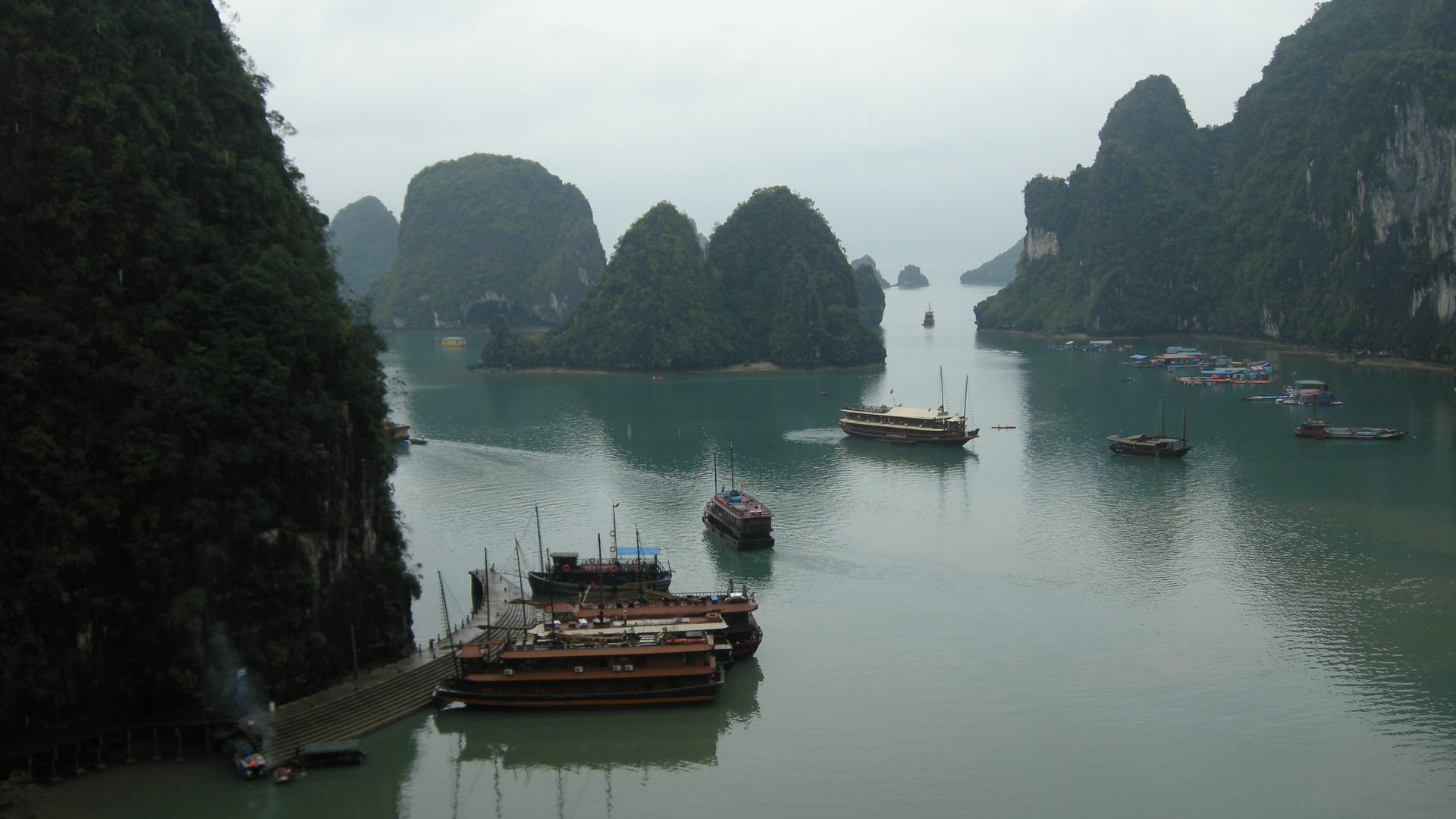
Photo proof: what each route shape feels like
Use the images as route signals. A strong route should look like a sequence, not a scatter plot.


Source diversity: what can and cannot be verified
Official destination, transport, airport, and weather sources can show which regions exist, how movement works, and which season pressure matters. They cannot tell you whether your exact route feels calm, whether your group likes long drives, or whether a beach night is worth the transfer cost.
| Source job | Useful reference | Traveler judgment still needed |
|---|---|---|
| Planning frame | Vietnam.travel plan your trip and weather pages. | Whether the route should favor weather-safe comfort or scenic ambition. |
| North spine | Vietnam.travel Hanoi, Ninh Binh, Ha Long, and Northern Vietnam pages. | Whether the north needs 2 nights or 5 before moving on. |
| Central spine | Vietnam.travel Central Vietnam, Hue, Hoi An, and Da Nang pages. | Whether the route should lean beach, heritage, or both. |
| South spine | Vietnam.travel Southern Vietnam, Ho Chi Minh City, and Phu Quoc pages. | Whether the south is a full chapter or just a final exit city. |
| Movement and timing | Vietnam.travel transport, airports, and Vietnam Railways booking references. | Whether a domestic flight, rail leg, road transfer, or open-jaw fare is the better trade. |
Route archetypes that actually age well
The best way to plan Vietnam is to pick a route archetype first, then choose the exact cities inside it. That keeps the article useful after prices, schedules, and hotel rankings change.
| Route archetype | What it includes | When to choose it | Main risk |
|---|---|---|---|
| North-only loop | Hanoi, Ninh Binh, and either Ha Long or Lan Ha as the one big landscape chapter. | Short first trips, food and scenery priority, or cooler-season travel when the north is the point. | Trying to add the central coast and south on top of a short north route. |
| Central spine | Hue, Hoi An, Da Nang, and optionally one beach or heritage extension. | Couples, families, food-first travelers, and anyone who wants calmer transfer density. | Weather pressure if beach ambition outruns season reality. |
| South-only loop | Ho Chi Minh City, Mekong, and optionally Phu Quoc or a city-beach split. | Island finish, warm-weather goals, or a southern entry/exit that makes the south the real chapter. | Expecting the south to replace the northern limestone or central heritage feeling. |
| North-to-south open-jaw | Fly into Hanoi, end in Ho Chi Minh City, and move one direction through the country. | Ten to fourteen days, first-time travelers, and anyone who wants the cleanest full-country shape. | Adding too many extra nights and losing the open-jaw efficiency you paid for. |
| Full-country one-way | North, central, and south in one direction with a realistic number of base changes. | Fifteen to twenty-one days and a traveler who values breadth without rushing. | Too many hotel moves and too few real rest nights. |
Trip length decides the route, not the other way around
Route shape should follow time budget. A first trip becomes premium when the days are used for presence, not pin collecting.
| Trip length | Best route shape | What to include | What to cut first |
|---|---|---|---|
| 7 days | One region only | Hanoi plus Ninh Binh, or Hoi An plus Da Nang, or Ho Chi Minh City plus Mekong. | Any second region and any token beach add-on. |
| 10 days | North plus central | Hanoi, Ninh Binh, one bay night, Hue, and Hoi An or Da Nang. | Mekong, Phu Quoc, or a second bay/beach stop. |
| 14 days | North-to-south open-jaw | Hanoi, Ninh Binh, bay, central Vietnam, and Ho Chi Minh City with one deliberate extension only. | The weaker of the optional beach or mountain add-ons. |
| 21 days | Full-country route with restraint | A north spine, a central spine, a south finish, and one slower chapter each for scenery and city rhythm. | Extra hotel swaps inside the same city. |
Open-jaw flights are often the cleanest answer
Open-jaw means you arrive in one city and leave from another. For Vietnam, that often means Hanoi in and Ho Chi Minh City out, or Hanoi in and Da Nang out if the central route is the real priority. It is not a luxury trick; it is often the simplest way to stop backtracking.
| Open-jaw question | Why it matters | Good answer | Risk answer |
|---|---|---|---|
| Does the route move in one direction? | If yes, open-jaw saves a return leg. | North to south, or north to central, or a clear loop with one clean finish. | You need to backtrack to recover a forgotten city. |
| Are baggage and booking rules simple? | Separate tickets can break a pretty itinerary if connections are fragile. | One ticket or a well-buffered connection with enough margin. | Tight self-transfer with heavy luggage and a long first-day route. |
| Do the arrival and departure cities match the actual route job? | Route shape should follow city function. | Hanoi for the north, Ho Chi Minh City for the south, Da Nang for the central coast. | Choosing a flight path that forces a city detour only because the fare looked lower at first glance. |
| Is the route long enough to feel the benefit? | Short trips do not always justify complex ticket logic. | Ten to fourteen days or more with a real multi-region sequence. | A very short trip where a simple round-trip would be calmer. |
Movement cost changes the route more than most travelers expect
A route should be judged by movement cost, not only by hotel rate or postcard value. The real expense is the time, fatigue, and transfer friction you remove or create.
| Movement type | Best use | Why it helps | When it is a bad trade |
|---|---|---|---|
| Domestic flight | Long country jumps and open-jaw route changes. | It can save a day when the route spans north, central, and south. | When the flight is only covering for a route that is already too full. |
| Train | Selected north-central or coast-aligned legs when the schedule works. | It can be calmer than a road transfer and more scenic than a flight. | When it creates an early-morning scramble that erases the benefit. |
| Private car / van | Point-to-point countryside, family, or transfer-heavy days. | It protects a route with pickups, stops, and flexible timing. | When the same money could buy a better route shape instead of a more expensive transfer. |
| Overland day | Shorter city-to-countryside links where the road itself is part of the trip. | It can be useful when the route is intentionally slow. | When it swallows the only rest day or adds backtracking. |
Which cities belong on which spine?
The route gets easier when you group Vietnam by spine instead of by list. That keeps the trip coherent even when you later change one city or one night.
| Spine | Core cities | What it gives you | What to avoid |
|---|---|---|---|
| North | Hanoi, Ninh Binh, Ha Long or Lan Ha. | City, countryside, and limestone scenery in one coherent arc. | Adding a southern city just because the fare search surfaced it. |
| Central | Hue, Hoi An, Da Nang. | Heritage, food, beach, and lower transfer friction. | Turning the central coast into three separate hotel changes for one short stay. |
| South | Ho Chi Minh City, Mekong, Phu Quoc. | Urban energy, river texture, island rest, and easy warm-weather planning. | Expecting the south to behave like the north in scenery or climate. |
| Beach finish | Da Nang, Hoi An, Phu Quoc, or a southern island extension. | A slower ending if the beach has enough nights to count. | A token beach overnight that steals the stronger days. |
Season and month should move the route too
Vietnam is not one climate. Route shape changes with season. A northern landscape route can feel excellent in one month and heavy in another, while the central coast can flip between beautiful and weather-sensitive faster than casual trip lists admit.
| Season pressure | Route implication | Best default shift | What to check live |
|---|---|---|---|
| North cooler months | The north can carry more scenic and city days comfortably. | North-only or north-plus-central routes become especially strong. | Forecasts, fog/rain, and transfer timing. |
| Central coast weather-sensitive months | Beach and heritage timing need more caution. | Tilt toward heritage, city, or flexible central days before beach expansion. | Rain, storms, and cancellation terms. |
| South warm and steady periods | The south can hold a city-plus-island finish well. | Open-jaw or south-finish routes become easier. | Heat, humidity, and flight connections. |
| Mixed-season shoulder months | The route should protect flexibility rather than chase perfection. | Use fewer bases with stronger buffer days. | Forecast updates, cancellation rules, and local advisories. |
Which route fits which traveler?
Route choice is also traveler fit. A couple, family, food-first traveler, and beach-first traveler may all be looking at the same country, but they should not book the same shape.
| Traveler type | Best route shape | Why | What to avoid |
|---|---|---|---|
| First-time solo traveler | One region or open-jaw with simple transfers. | Confidence comes from less juggling, not more moving parts. | Trying to see every famous place on the first pass. |
| Couple | North plus central or open-jaw with a slower middle. | This creates a premium-feeling sequence without constant packing. | Too many early morning checkouts. |
| Family | Central spine or north plus central with fewer hotel changes. | Families benefit from predictability, food access, and shorter transfer days. | Multi-city compression that turns every day into logistics. |
| Food-first traveler | North plus central or south plus central depending on flight geometry. | Food quality grows when meals can be spaced around a coherent route, not chase-mode movement. | Routes where dinner is always an afterthought. |
| Beach-first traveler | One region plus one beach finish. | Beaches need enough nights to slow the pace, not just a sunset photo. | A token beach stop at the end of an overfull trip. |
Route red flags
The route is probably too ambitious if it starts with one of these mistakes.
| Red flag | Why it breaks the trip | Safer alternative |
|---|---|---|
| Trying to fit north, central, and south into a very short trip | The route becomes a transfer race instead of a travel experience. | Pick one region, or two at most. |
| Choosing a route by the cheapest fare only | A cheap ticket can hide expensive movement cost later. | Compare the full route shape, not just the flight price. |
| Adding an island without enough nights | The transfer can eat the rest value. | Use the island only when it is the actual point of the trip. |
| Backtracking across the country for one missing city | You pay twice in time and fatigue. | Decide earlier whether the missing city belongs in this trip at all. |
| Treating every night as interchangeable | Arrival nights, transfer nights, and scenic nights need different base jobs. | Assign each night a job before booking the room. |
Live checks before you lock the route
- Check the flight map first: arrival city, departure city, and whether open-jaw saves a real transfer.
- Check the weather and the month before you choose beach or bay priorities.
- Check whether the route depends on a train, domestic flight, or long road transfer that will need an early wake-up.
- Check how many hotel moves the route creates and whether each move solves a real problem.
- Check if the route still feels good when you cut one stop from the draft. If it collapses, it was too full.
- Check cancellation and baggage rules before using separate tickets or open-jaw flights.
Related VietnamGuide routes
FAQ
What is the best route for first-time visitors to Vietnam?
For most travelers, a north-to-south open-jaw or a north-plus-central route is the strongest answer. The best route is the one that gives each night a job and avoids needless backtracking.
Is 10 days enough for Vietnam?
Yes, but only for a north-plus-central route or a very tight open-jaw. Ten days is usually not enough to cross every region without rushing.
Should I start in the north or the south?
Start where your route shape and flight pricing make the most sense. North works well for scenery and a classic first-trip arc. South works well when the south is the point, or when a southern exit makes the route cleaner.
Is open-jaw worth it?
Usually yes if the trip is long enough. Open-jaw saves backtracking when the route naturally moves in one direction, especially on 10- to 14-day trips.
Should I add an island to every first trip?
No. An island is only worth it when the route has enough nights to let it feel like a rest chapter rather than a transfer detour.
Update log
Expanded the native WordPress post brief into a complete route-shape guide with a photo-led hero, proof panel, concierge verdict, at-a-glance matrix, photo proof, source-diversity table, route archetypes, trip-length ladder, open-jaw logic, movement-cost guidance, regional spine, season filter, traveler-fit table, red flags, live checks, FAQ, related routes, source trail, and update log. The post remains draft for WordPress Admin review.
Reviewed by VietnamGuide editorial review
Connected Destinations along the Classic Vietnam Grand Route
Continue your Vietnam route seamlessly with verified transit times and natural regional connections.
Hanoi & Northern Karsts
Begin in Hanoi with Old Quarter food alleys before cruising Ha Long Bay and cycling Ninh Binh.
Central Heritage Corridor
Immerse in lantern-lit Hoi An, imperial palaces in Hue, and sandy beaches in Da Nang.
Southern Riverine Route
Experience Saigon's energy, historic Cu Chi tunnels, and sampan waterways in the Mekong Delta.